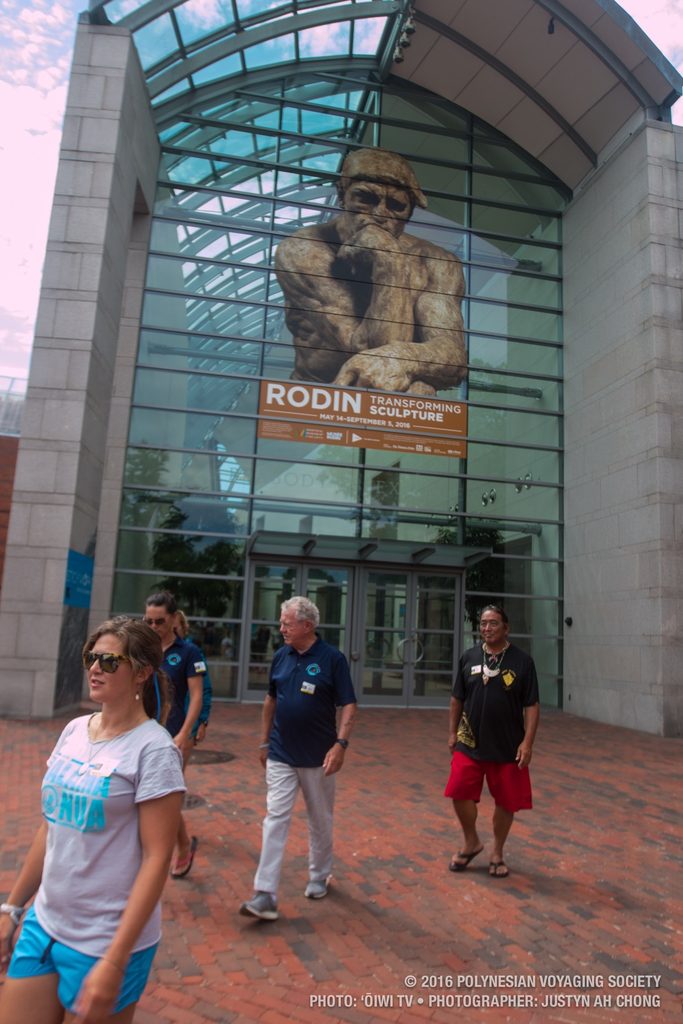
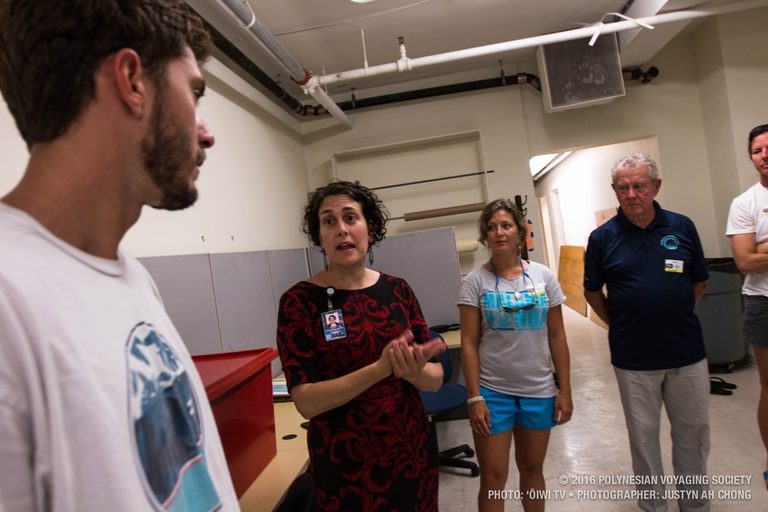
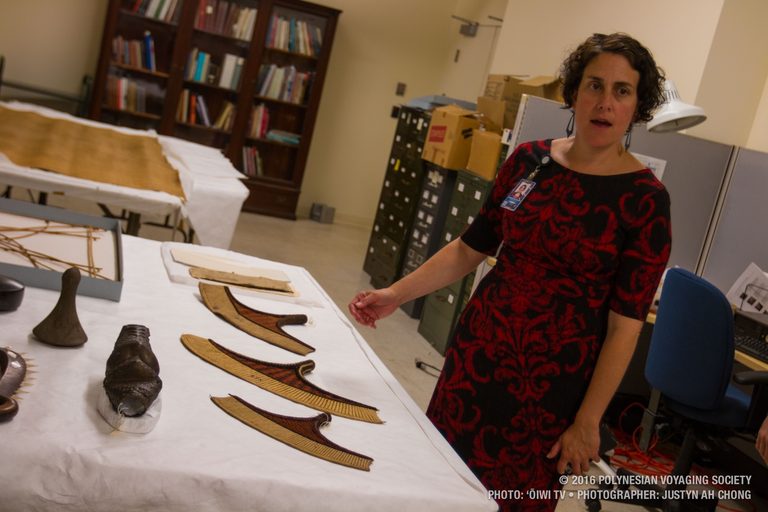
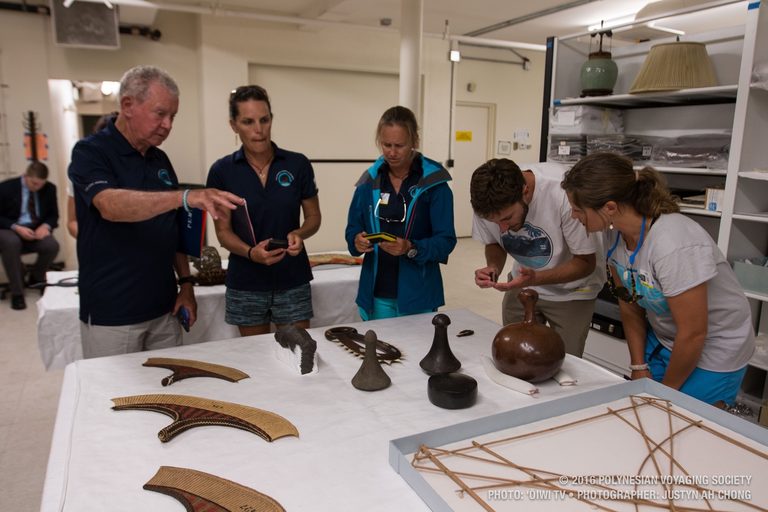
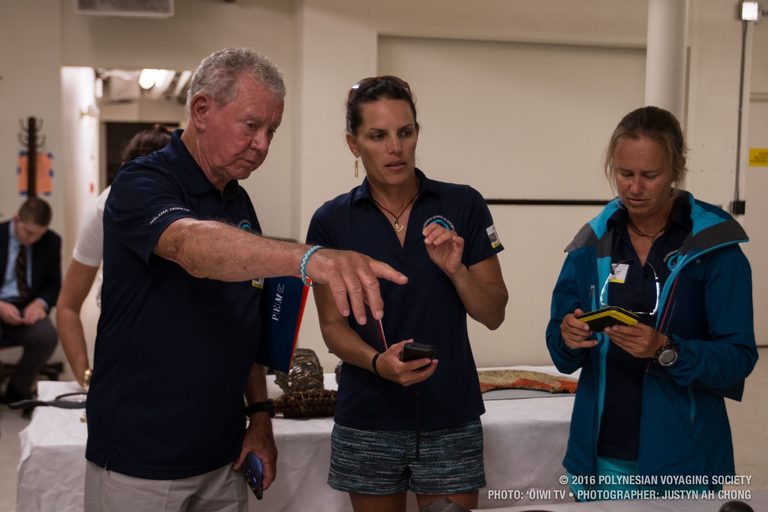
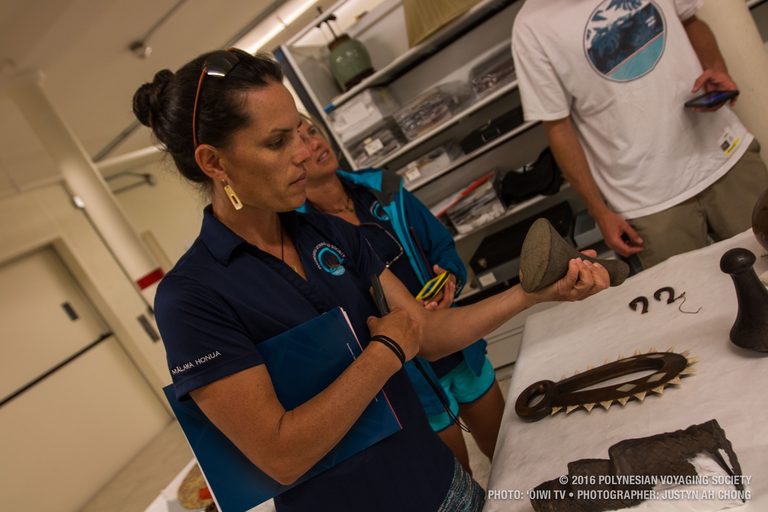
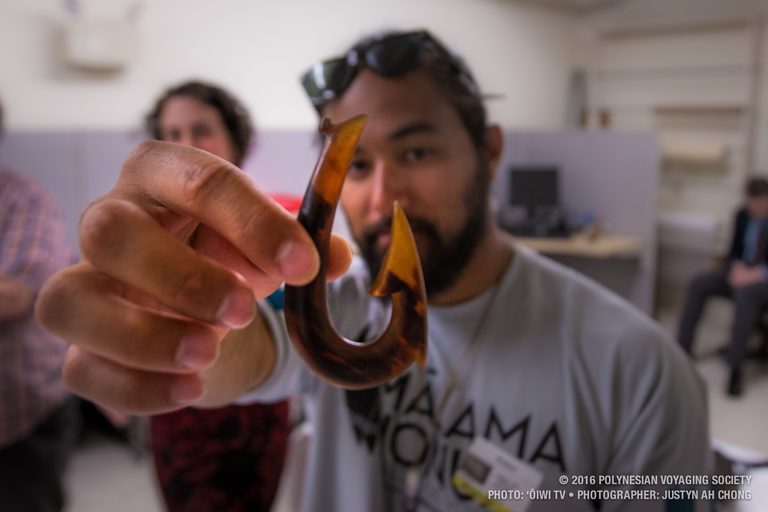
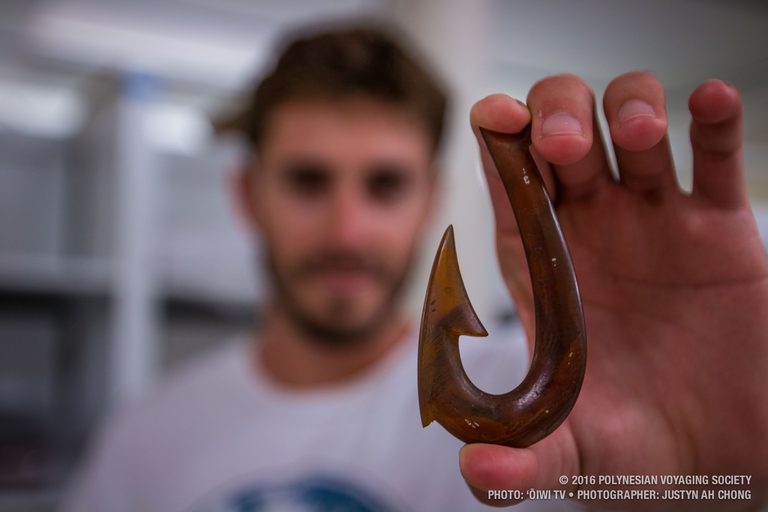
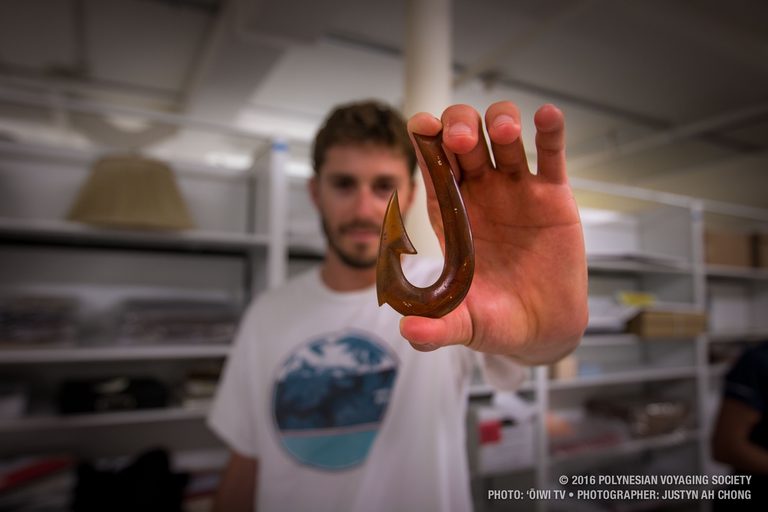
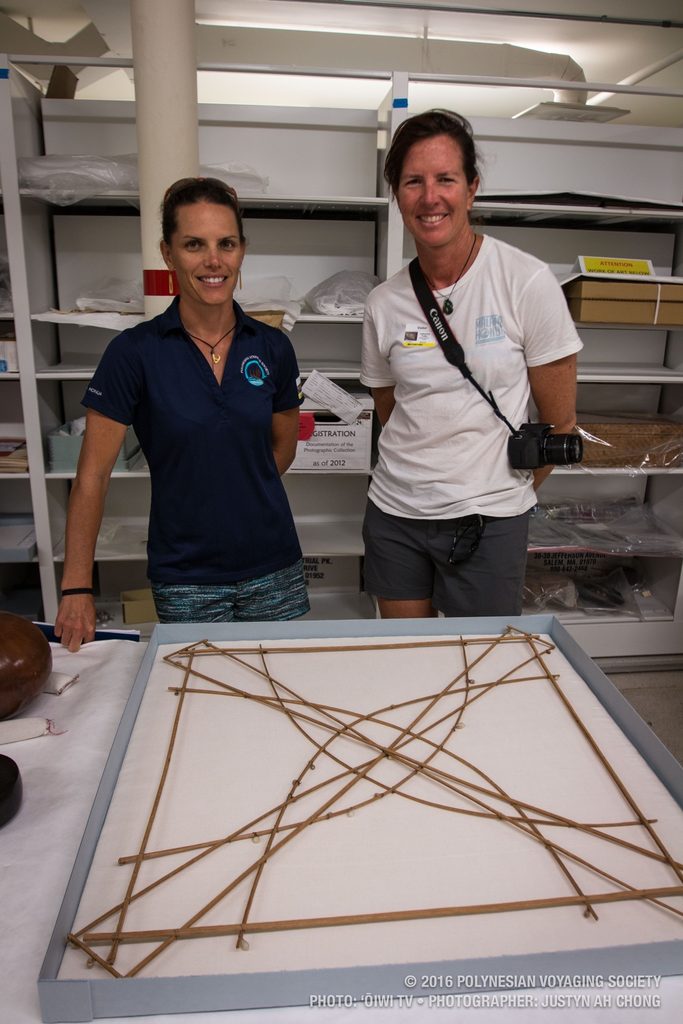
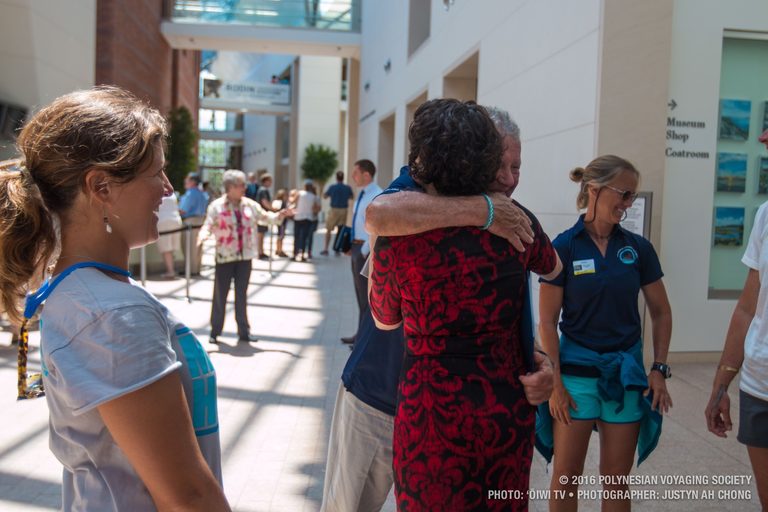
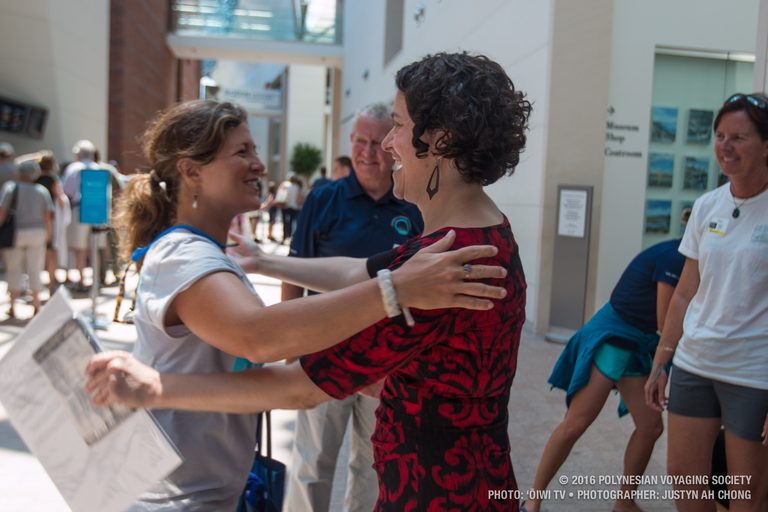
Many believe that touch has the power to heal…but can it heal cultural wounds? On a visit to the Peabody Essex Museum in Salem, Massachusetts, we had the opportunity to test this idea. The giver of this gift, Karen Kramer, one of the curators, is a different breed of museum leader. For our visit to the museum, she brought out just a small sample of the large Polynesian collection housed in the museum, much of it not on public display. In most museums, items in these collections are displayed behind glass, or less frequently shared for closer inspection in private, secured rooms. The ability to see, but not touch, elements of one’s own culture perpetuates the viewpoint that the relevance of native cultures is “past”; cultural objects are removed from circulation and displayed for view by the general public. They are isolated from their context, taken from the hands that made them and exhibited for all eyes to see. Karen offered us a once in a lifetime gift: the choice to be able to handle objects that our kupuna were familiar and even intimate with. Her manaʻo is that the personal connection of people to objects helps to maintain them as a part of the living culture.
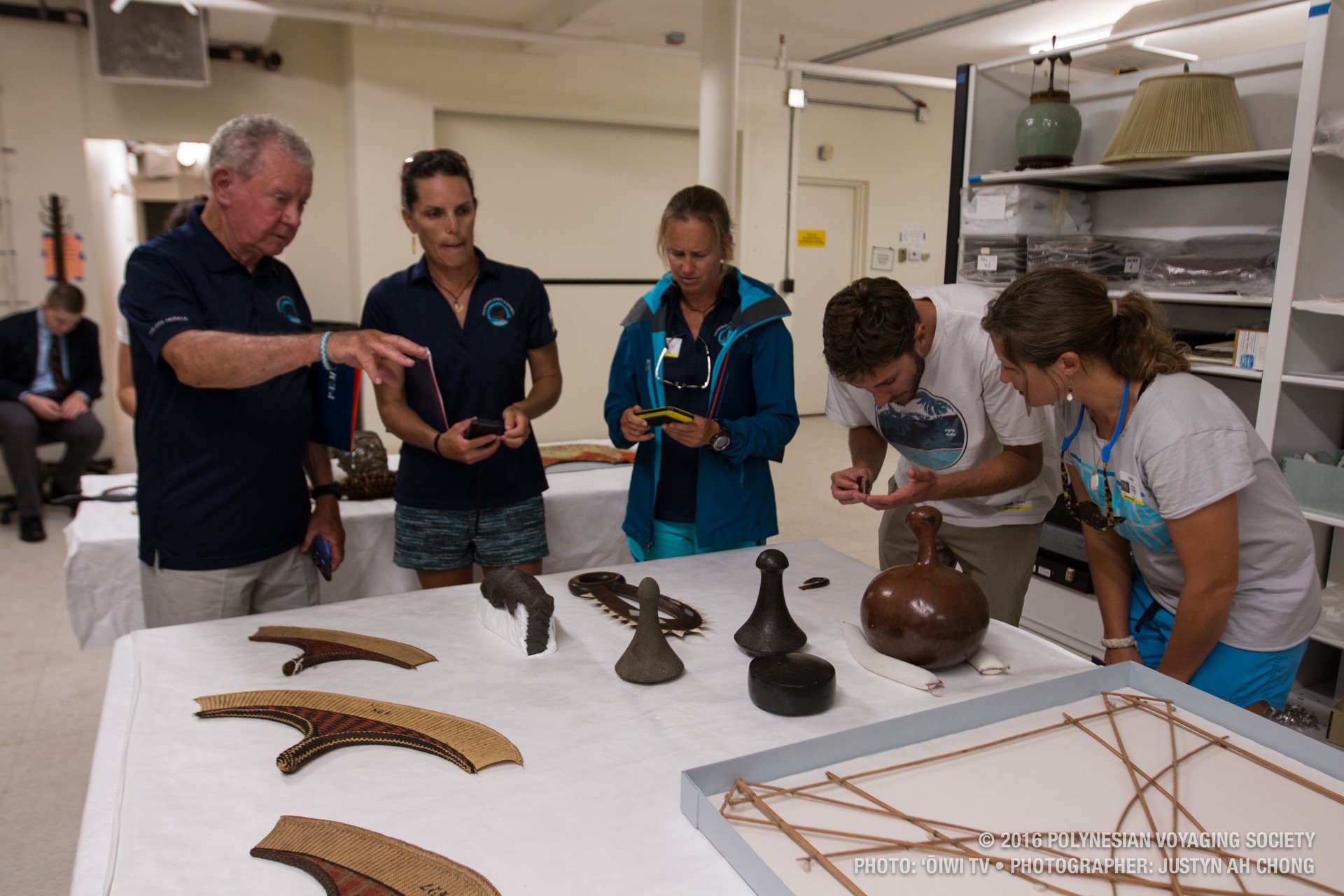
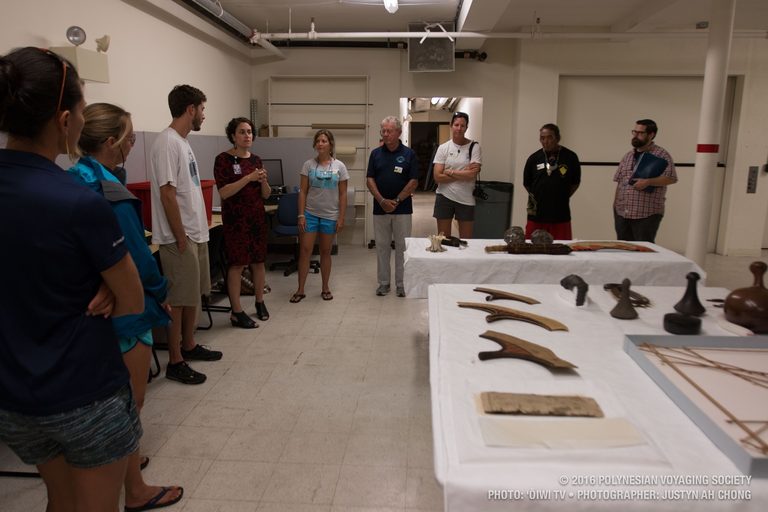
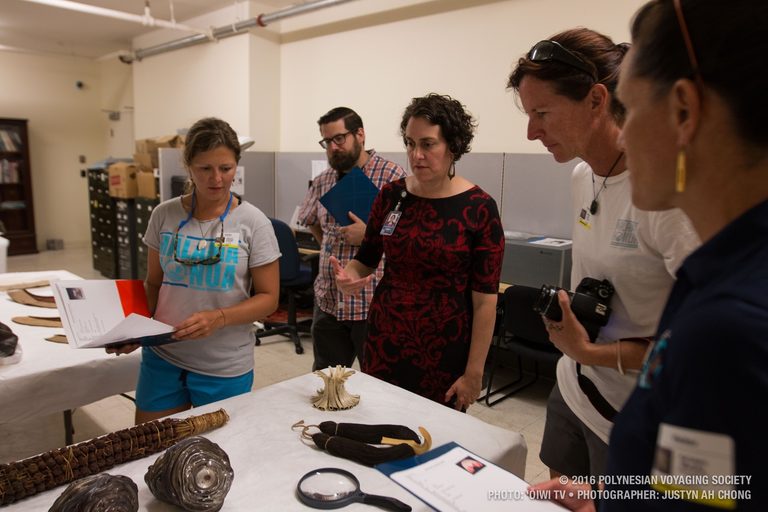
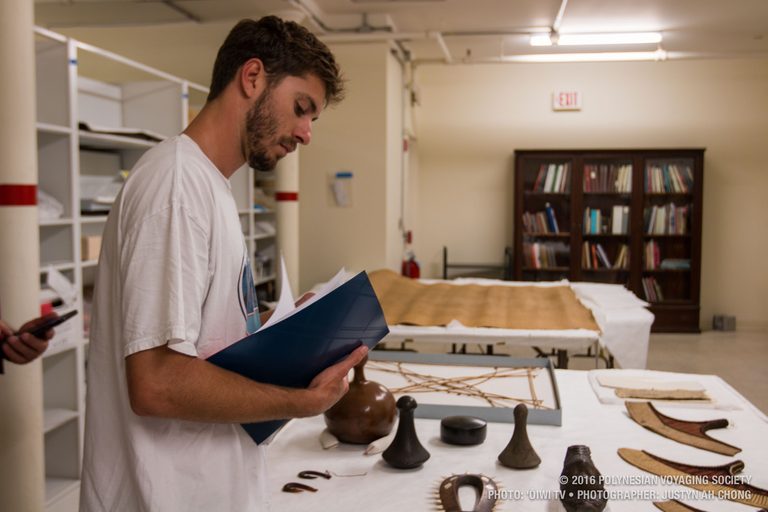
The crew takes a look at different Hawaiian artificats in the Peabody Essex collection.
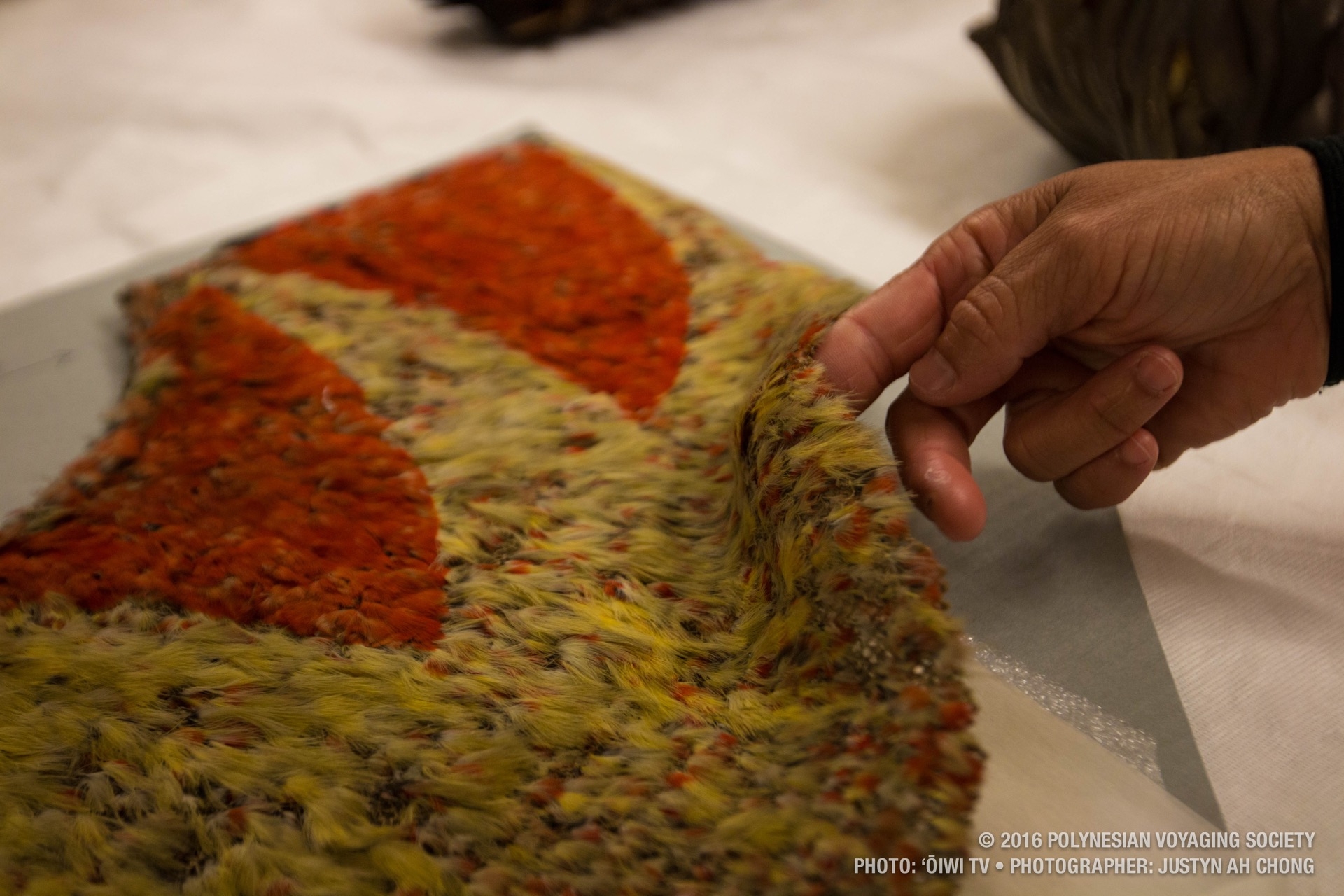
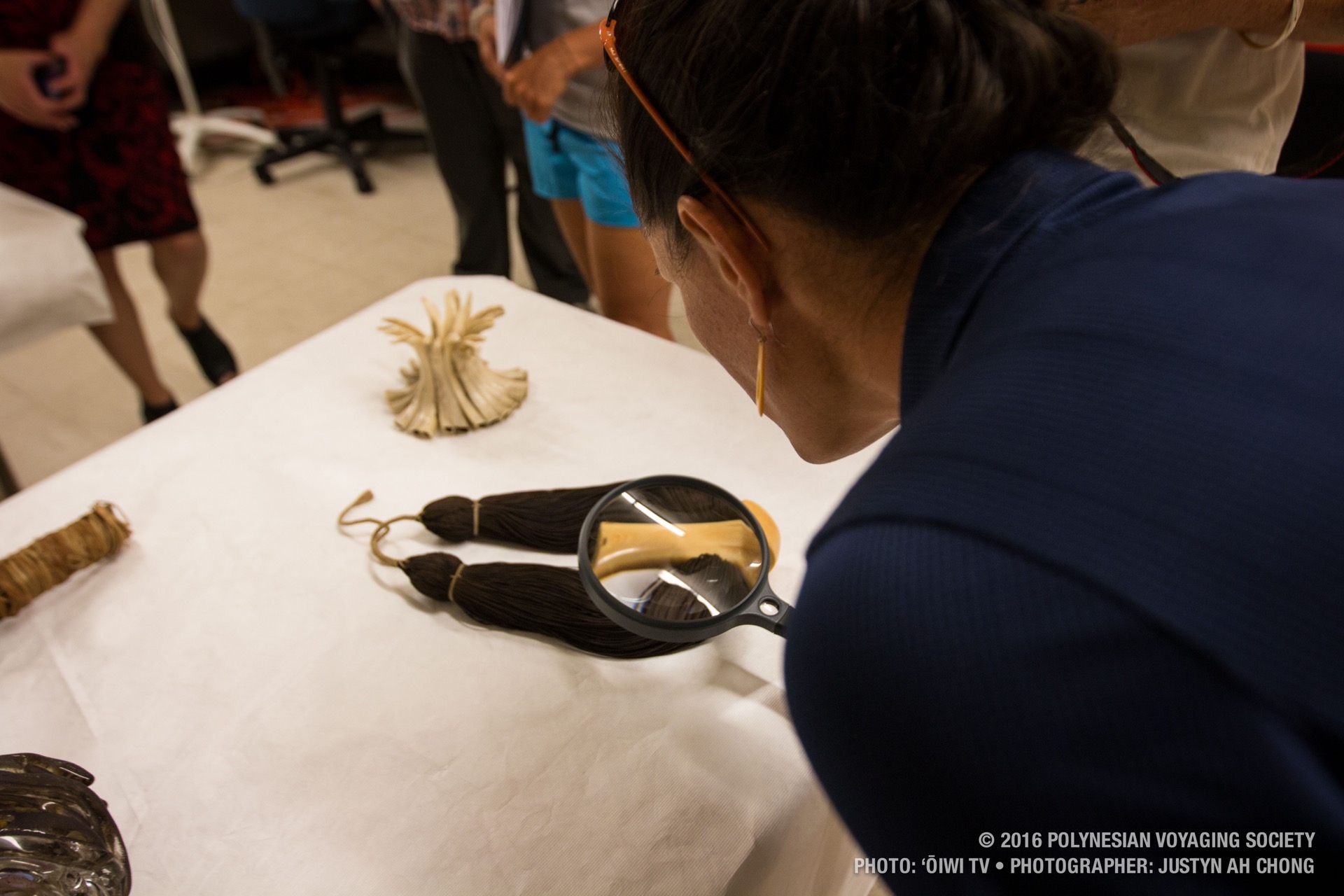
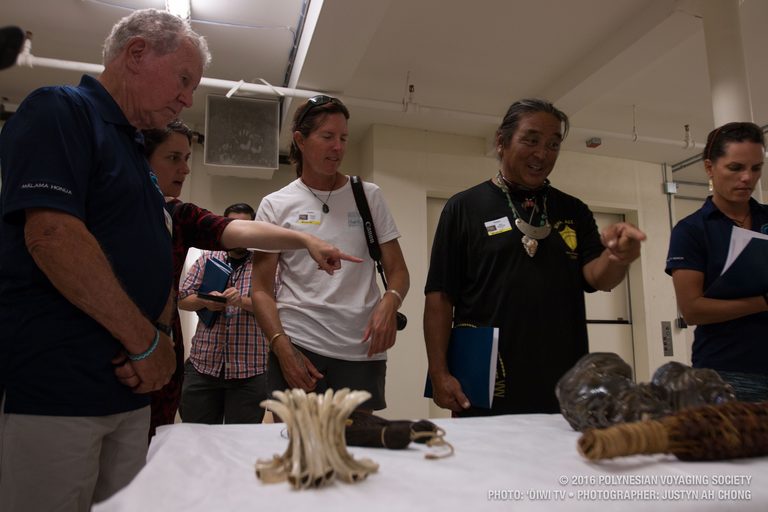
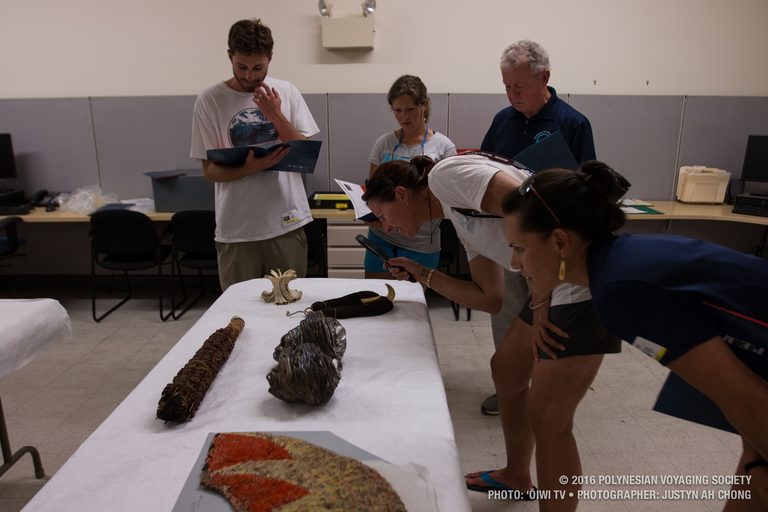
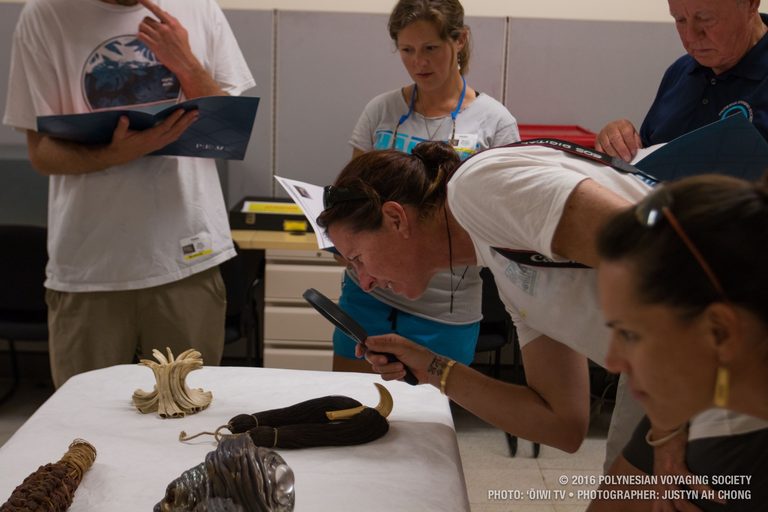
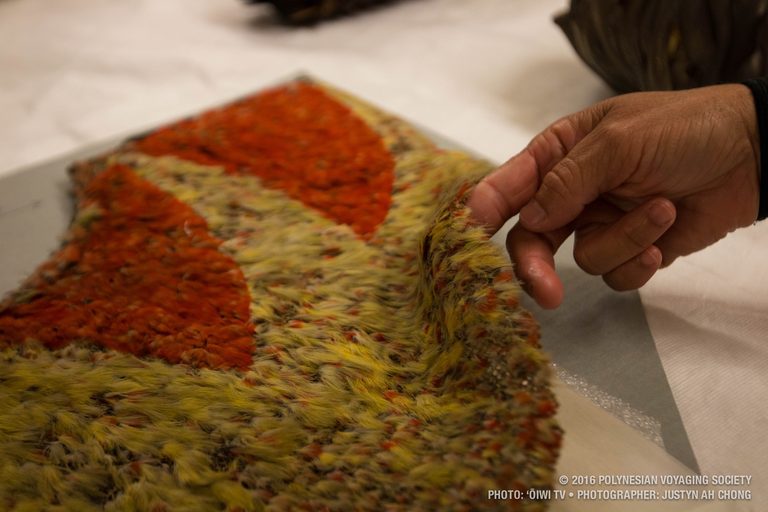
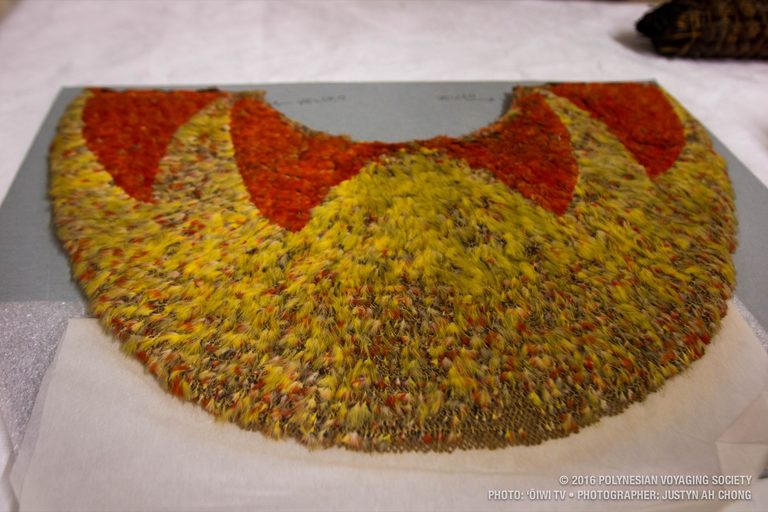
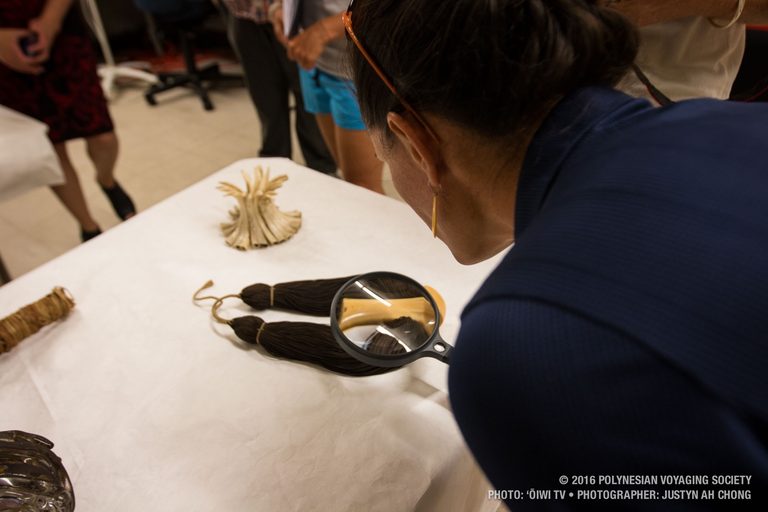
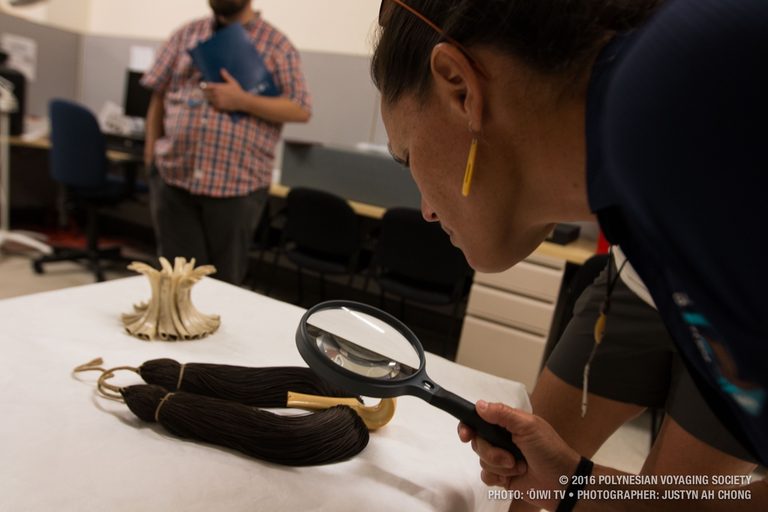
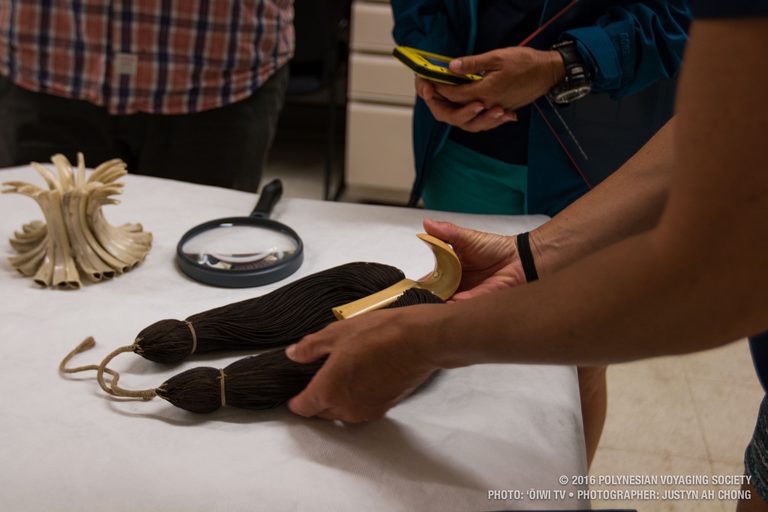
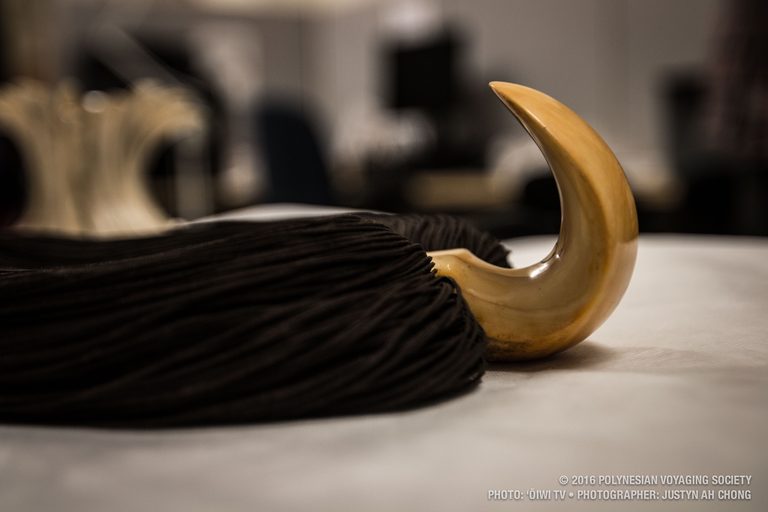
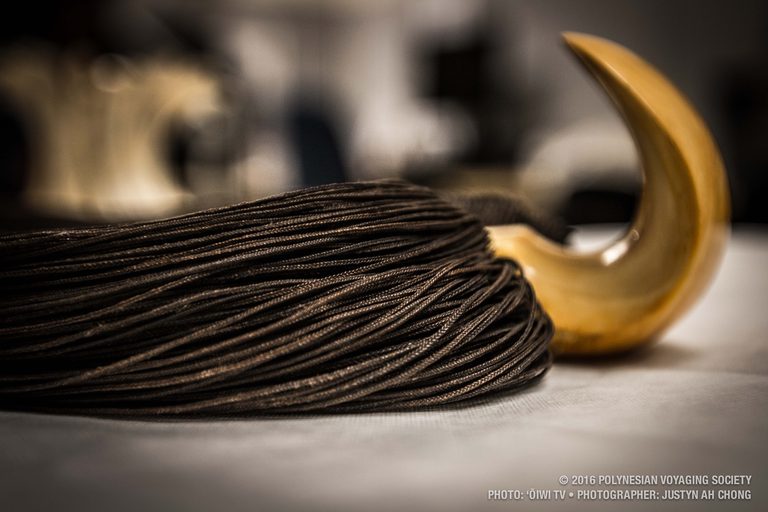
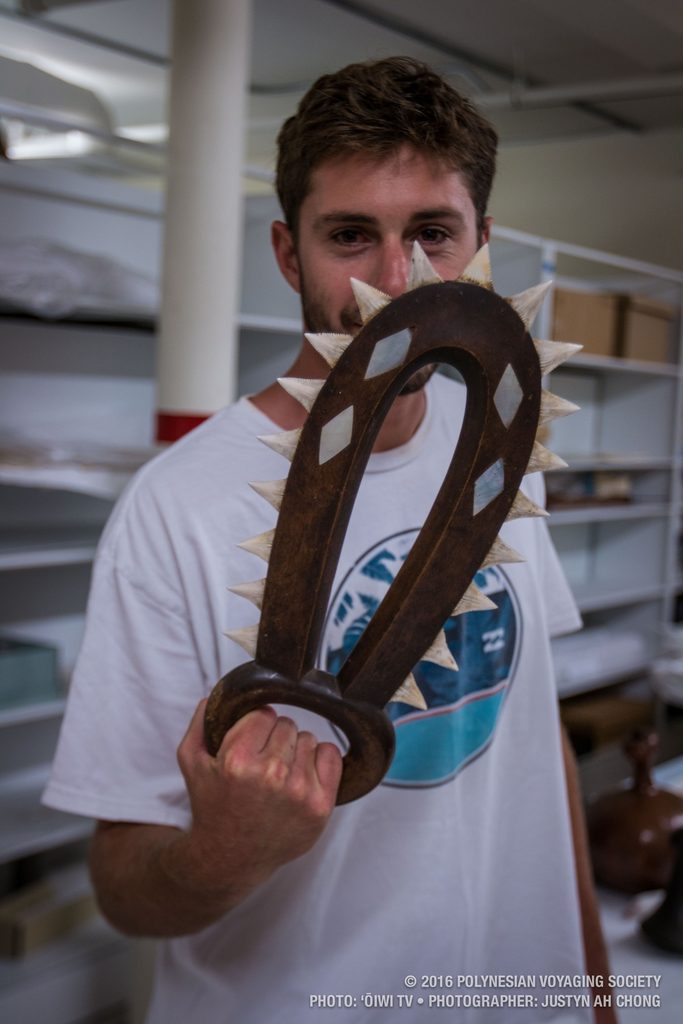
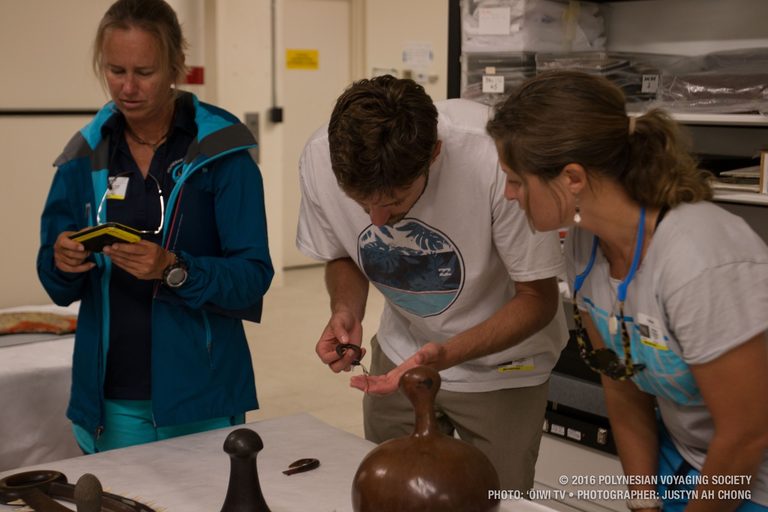
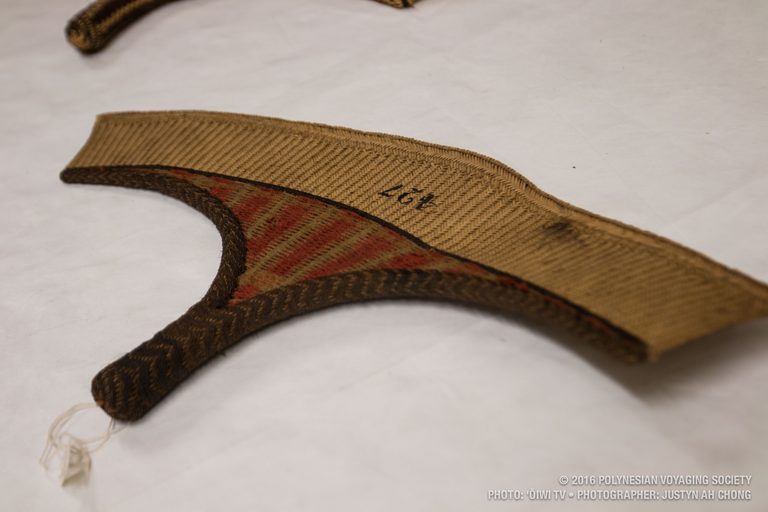
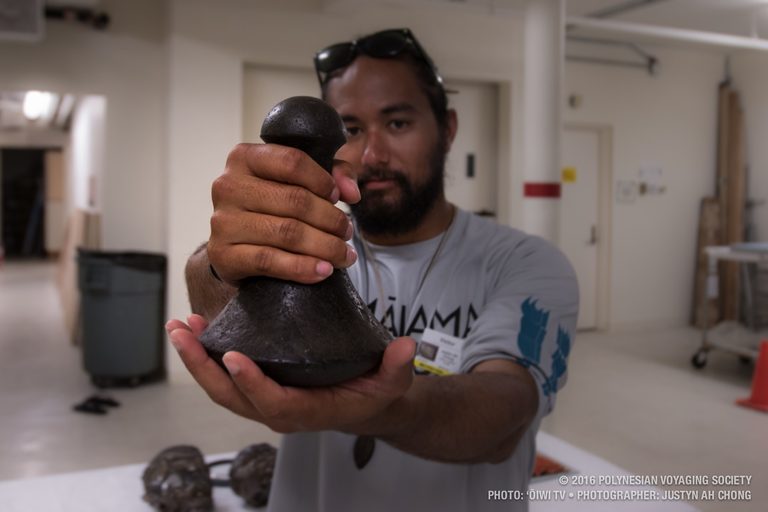
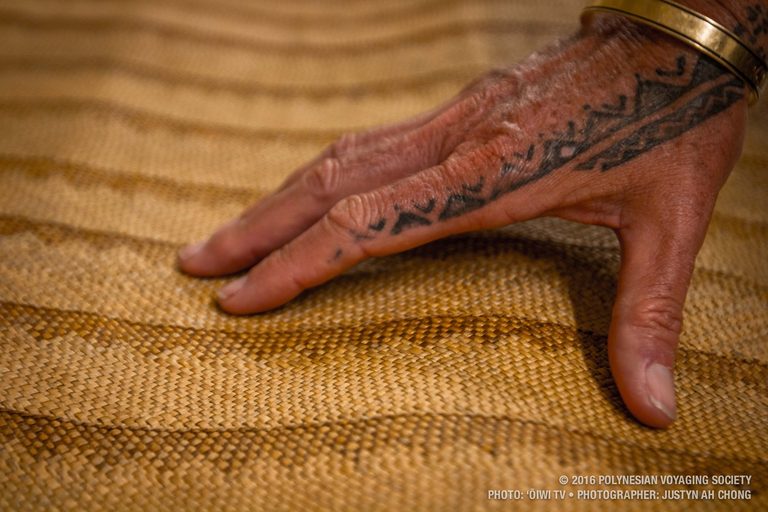
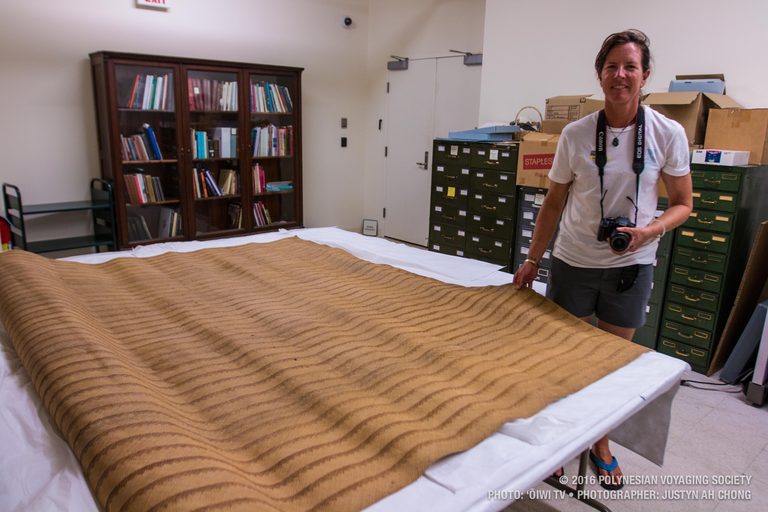
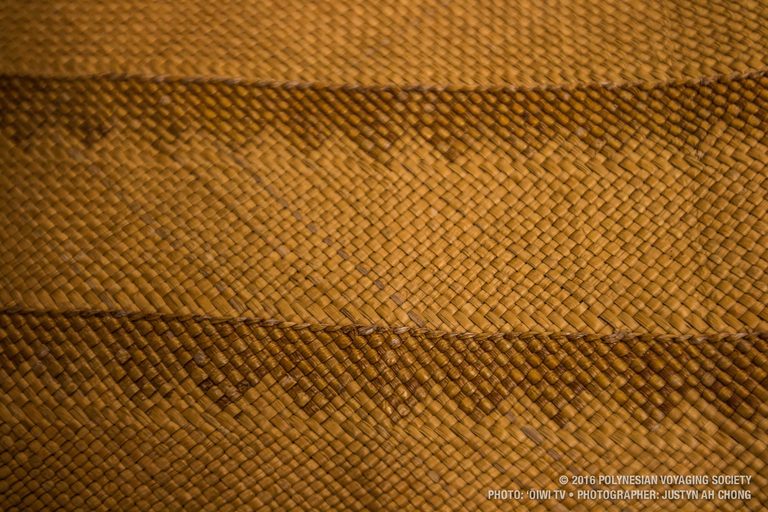
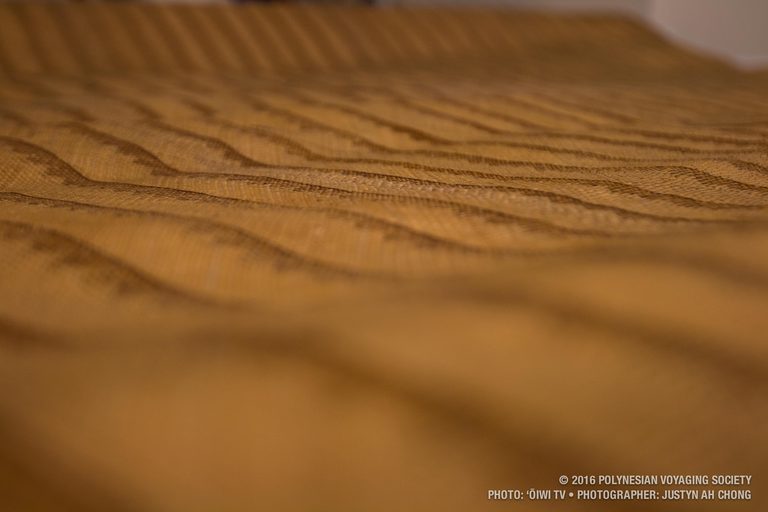
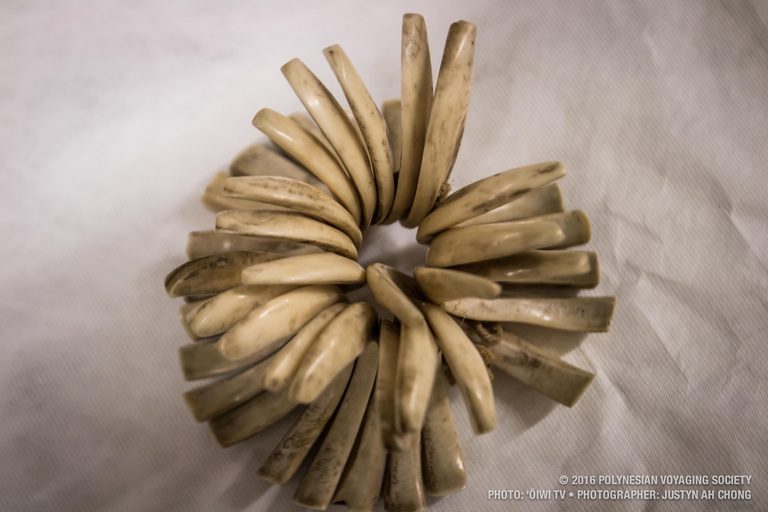
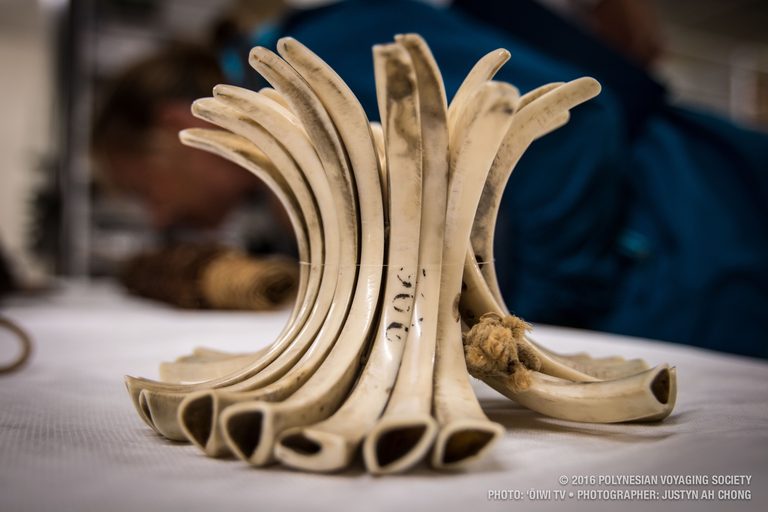
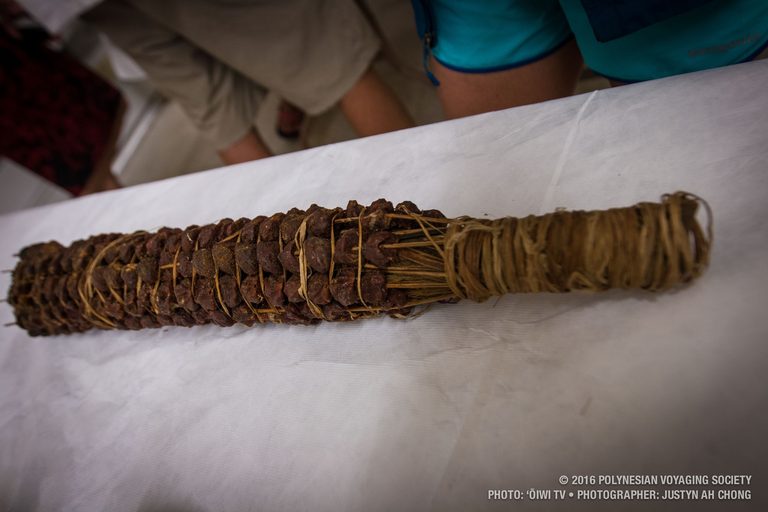
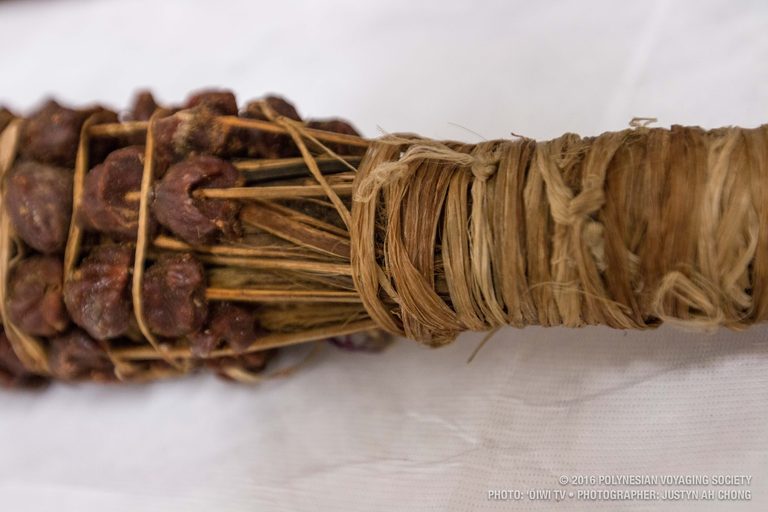
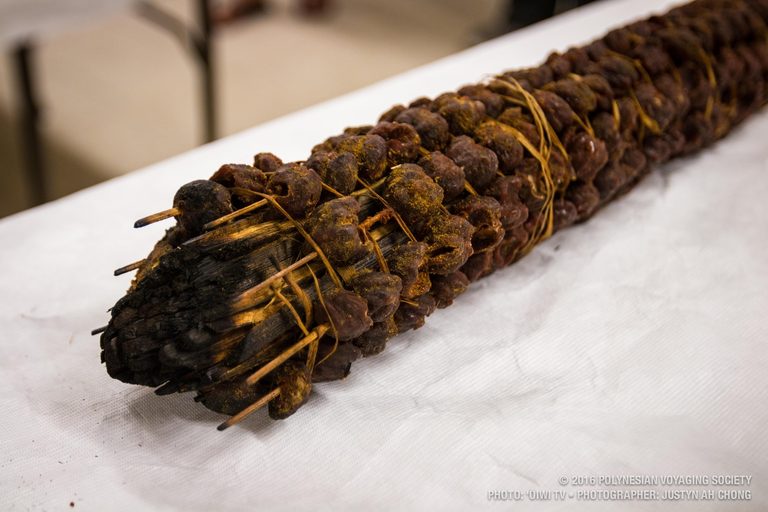
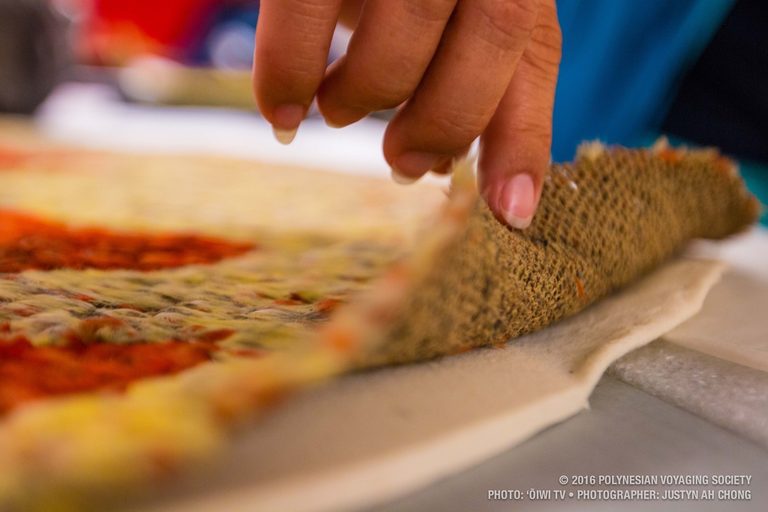
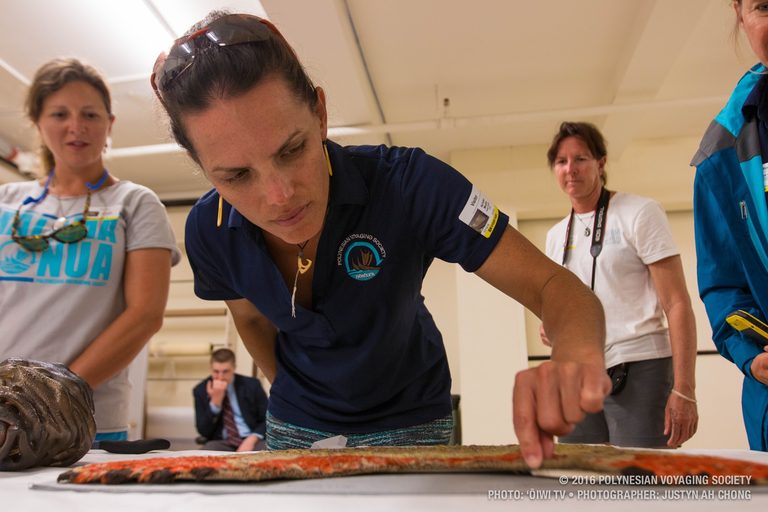
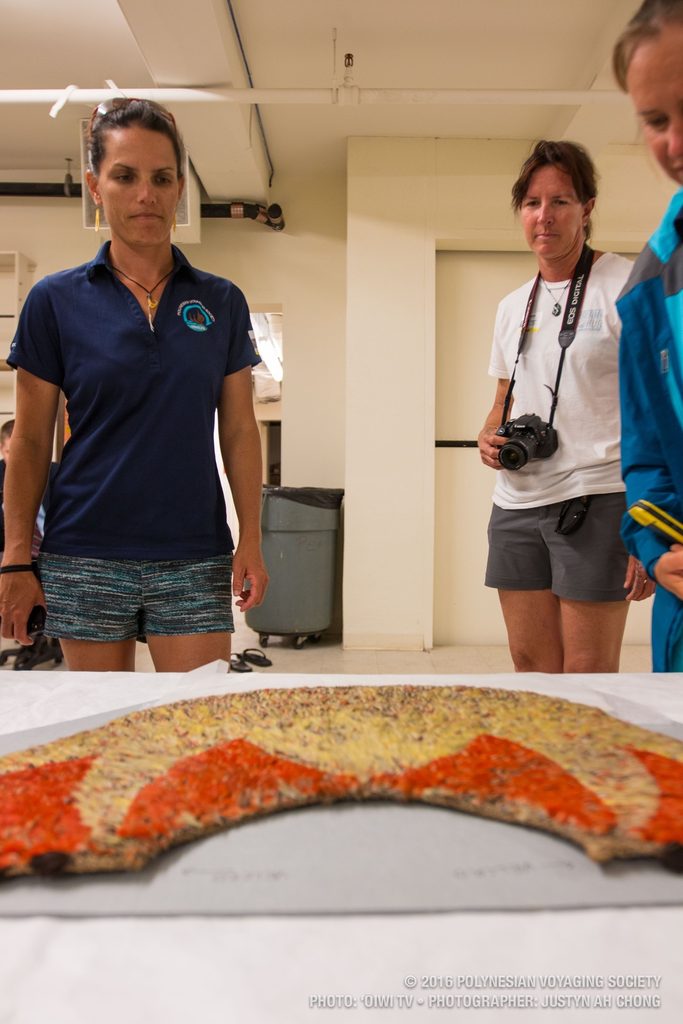
We viewed two fans, two fishhooks, an ʻulu maika disk, a large makaloa mat, a lei niho palaoa, an ipu, two poi pounders, a shark-tooth weapon, a feather cape, a kukui nut torch and a boar-tusk anklet. Many of us were surprised by the fine braiding of the lei niho palaoa and the density of the basalt in the ʻulu maika stone. We marveled at the flexible softness of the makaloa mat and the razor sharpness of the shark’s teeth. We saw the heft of the lama kukui, and the silk of rare feathers. All of these objects were obviously beautifully made and lovingly cared for.
A crewmember observes the delicacy of an ʻahu ʻula. The crew was privileged to be able to actually experience the objects through touch.
For all of us, the first thought upon hearing Karen’s offer was not “can we touch these” but “should we?” Reverence for our culture is retained in the respect we give objects of stature, and so before we did anything, we formed a circle and said a pule of forgiveness and protection. Forgive us for leaving you in this place far from home. Forgive us for any offense in handling you. Accept our humble gratitude for the ability to see our kupuna in you and know them through you. Each of us, understanding the depths of antiquity cloaking these objects and the mana borne by them, approached each of these objects with wonder and profound respect. For some, the opportunity offered to us was too overwhelming. For others, the choice offered a moment to experience what our kupuna knew and to learn from it. What do we do? The choice was individual.
Kaʻiulani Murphy inspects the intricacies of a lei niho palaoa through a magnifying glass.
Ultimately, the value in visiting these objects, much less handling them, was simply being given time to visit them as cherished kupuna, not merely view them objectively as artifacts. Only when the past becomes real to those who live in the present, can we feel the presence of our forbears in the objects they held dear, and, likewise, only when we can sail a canoe around the world for hands to touch and feet to tread, do we continue weaving the story of a living culture.
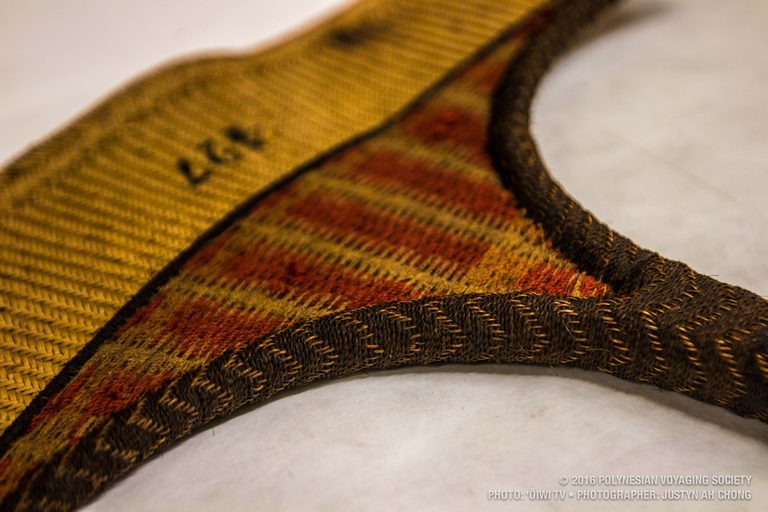
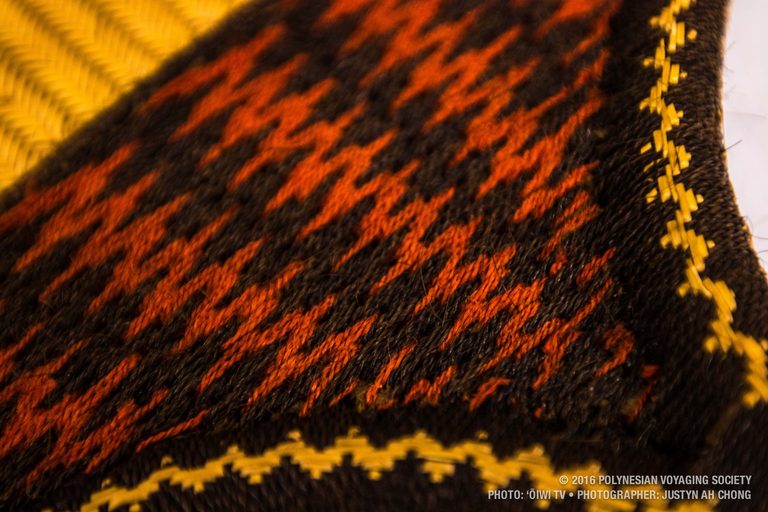
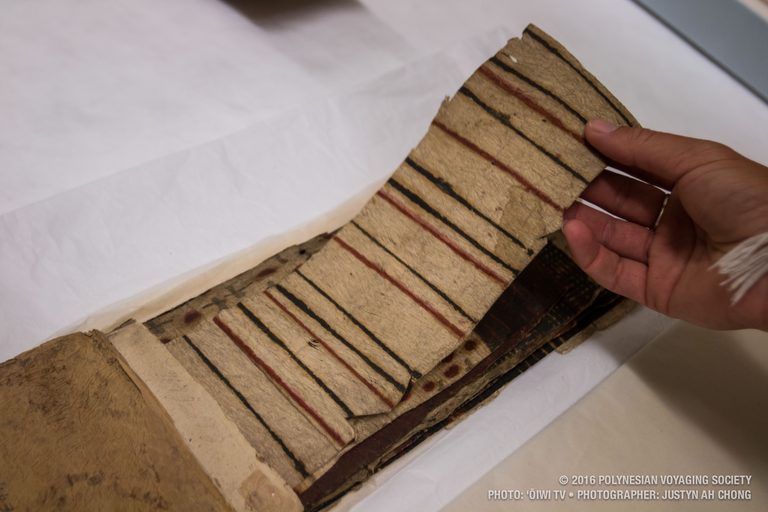
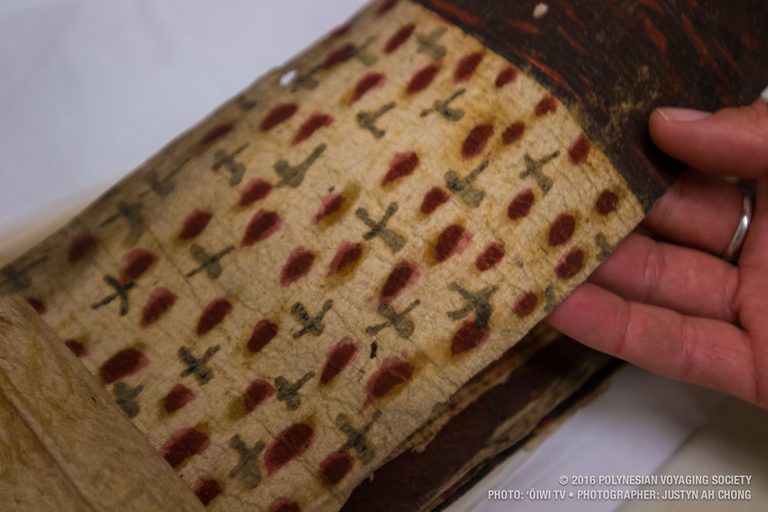
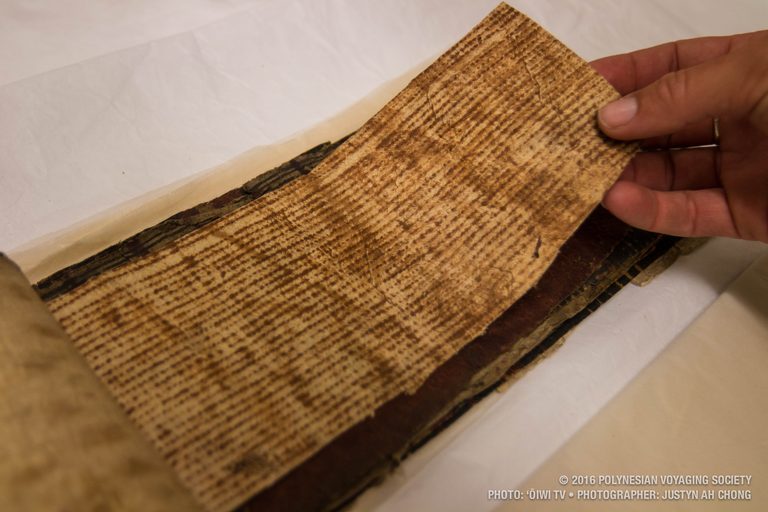
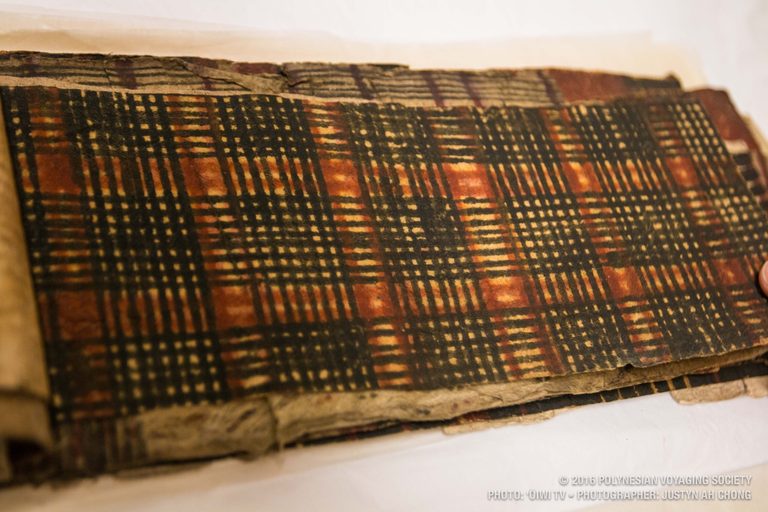
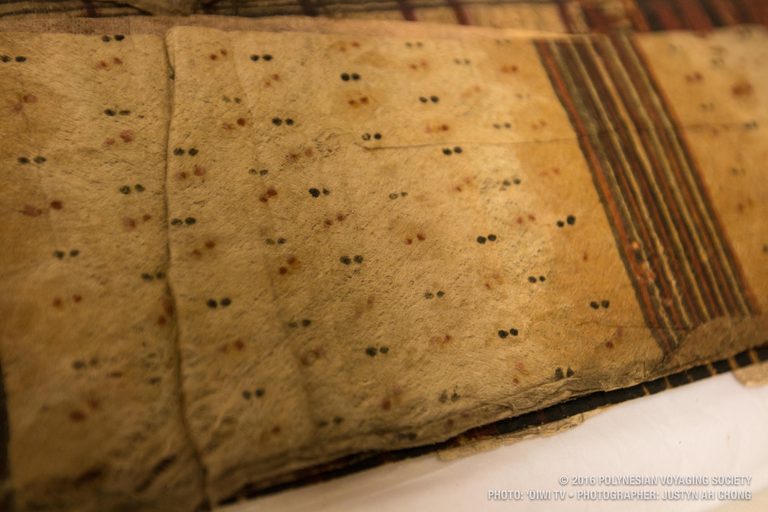
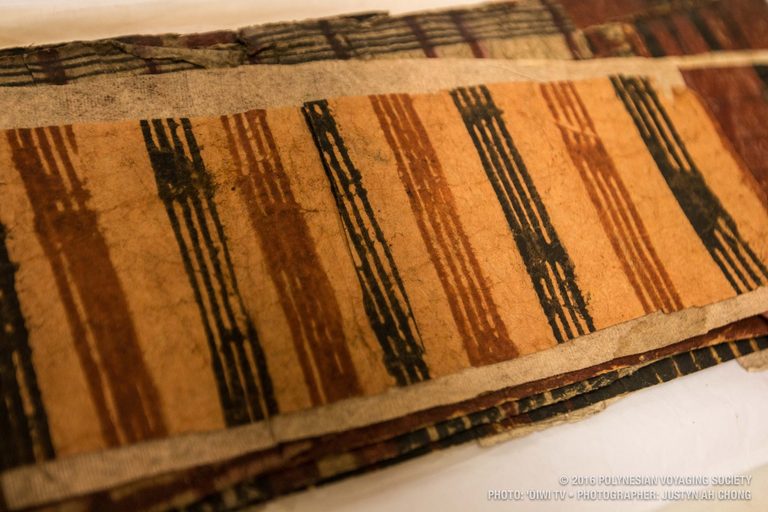
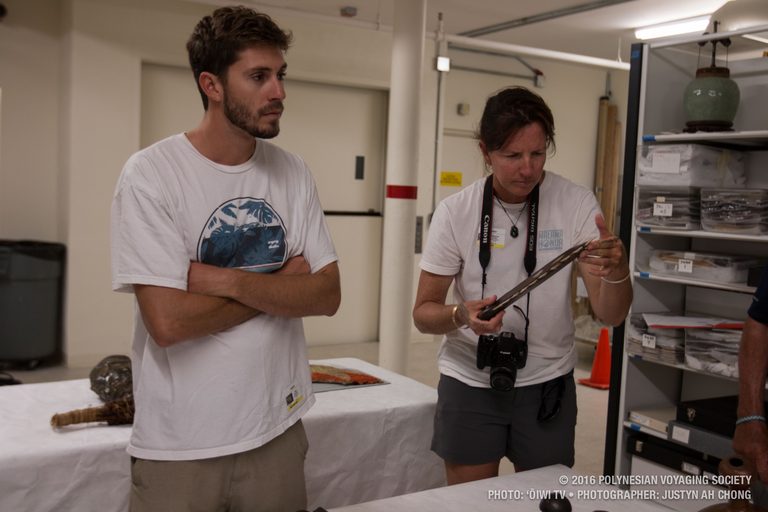
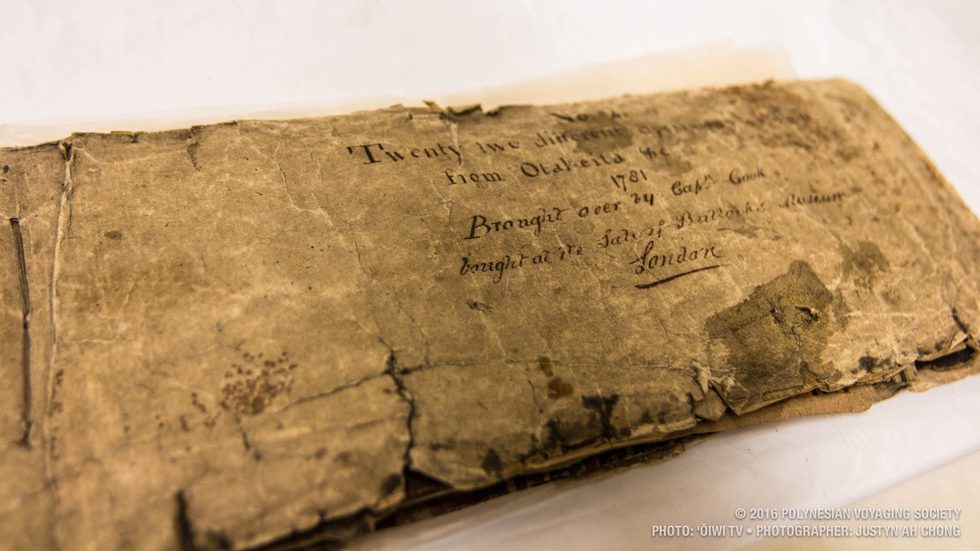
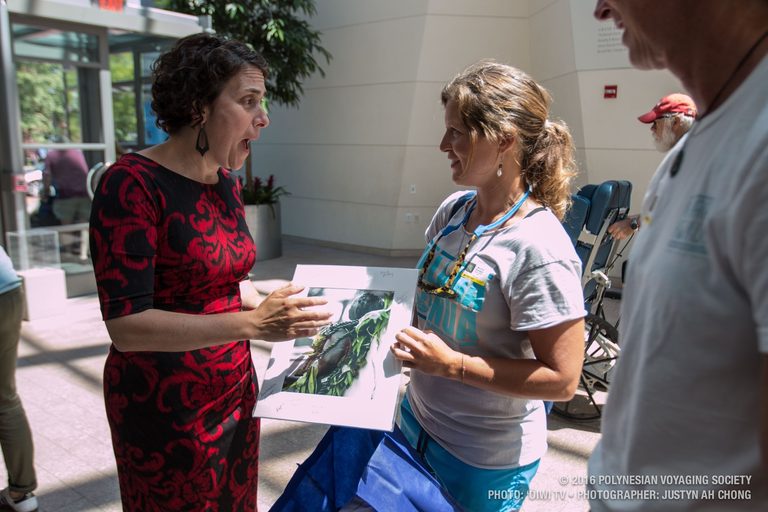
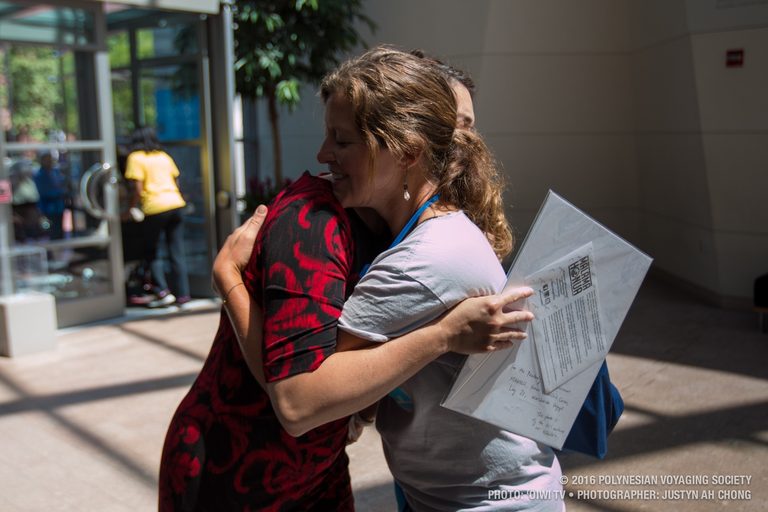
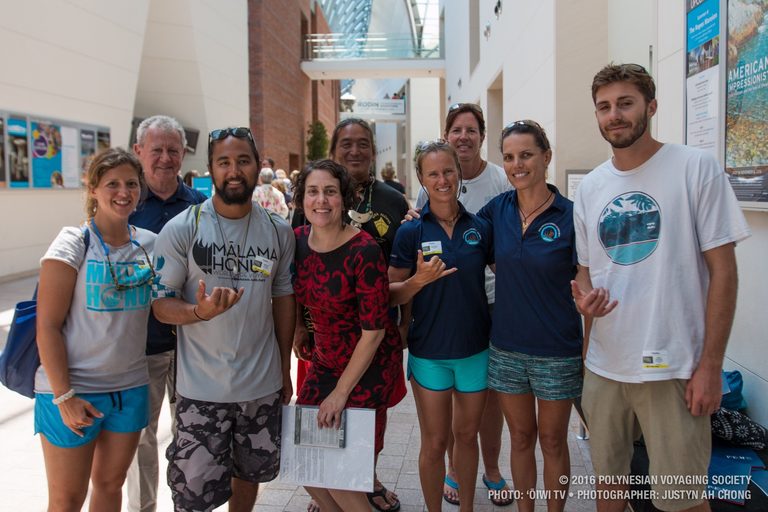
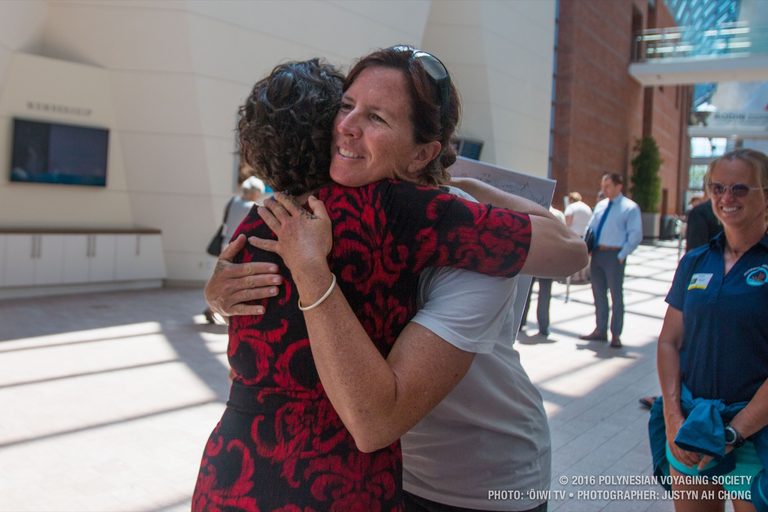
The crew gets a chance to visit the Peabody Essex Museum in Salem.Curator Karen Kramer welcomes the crew into the storage facility where the crew was able to experience traditional Hawaiian artifacts.Curator Karen Kramer welcomes the crew into the storage facility where the crew was able to experience traditional Hawaiian artifacts.The crew takes a look at different Hawaiian artificats in the Peabody Essex collection.The crew takes a look at different Hawaiian artificats in the Peabody Essex collection.Catherine Fuller observes the braids on a lei niho palaoa through a magnifying glass.A crewmember observes the delicacy of an ʻahu ʻula. The crew was privillaged to be able to actuallly experience the objects through touch.An ʻahu ʻula, or Hawaiian feather cape.Curator Karen Kramer explains a little about the Hawaiian artifacts in their collection.Jesse Yonover reads through the item descriptions provided by the Museum.Curator Karen Kramer points out a few woven fans to the crew.Kaʻiulani Murphy inspects the intricacies of a lei niho palaoa through a magnifying glass.Kaʻiulani Murphy inspects the intricacies of a lei niho palaoa through a magnifying glass.The opportunity to hold a lei niho palaoa was a rare and humbling experience.Details of the whale tooth in the lei niho palaoaDetails of the braided human hair strands that make up the revered lei niho palaoa.Jesse Yonover holds a Leiomanō or shark-tooth weapon, made of teeth from the great white shark.The crew takes a look at different Hawaiian artificats in the Peabody Essex collection.The crew discussing the different Hawaiian artificats in the Peabody Essex collection.The crew takes a look at different Hawaiian artificats in the Peabody Essex collection.A intricately woven handheld fan.Details of an intricately woven handheld fan.Details of an intricately woven handheld fan.Kaʻiulani Murphy observes a pōhaku kuʻi ʻai, or poi pounding stone.A crewmember flips through a kapa design swatch book, gathered by Captain Cook while in Hawaiʻi.A crewmember flips through a kapa design swatch book, gathered by Captain Cook while in Hawaiʻi.A crewmember flips through a kapa design swatch book, gathered by Captain Cook while in Hawaiʻi.Swatches of kapa, each with a different feel and design, all put together in a booklet.Swatches of kapa, each with a different feel and design, all put together in a booklet.Swatches of kapa, each with a different feel and design, all put together in a booklet.Catherine Fuller observes the details of the leiomanō.The cover of a kapa swatch book, gathered and put together by Captain James Cook.Justyn Ah Chong feels the weight of pōhaku kuʻi ʻai or poi pounding stone.Justyn Ah Chong inspects the beautiful details of a fish hook made of turtle shell.A beautifully made turtle shell fish hook.Jesse Yonover holds a beautifully made turtle shell fish hook.Navigators Kaʻiulani Murphy and Catherine Fuller stand next to a Micronesian stick chart, used culturally for deep sea navigation.Catherine Fuller feels the texture and flexibility of the finely woven makaloa mat.Catherine Fuller stands next to a large woven makaloa mat.Details of the finely woven makaloa mat.The waviness of the unfurled makaloa mat resembles the surface of the ocean that Hōkūleʻa travels upon with its ever-breathing swells.A kupeʻe, or anklet, made of boar tusks.A kupeʻe, or anklet, made of boar tusks.A traditional kukui nut torch.Details of the traditional kukui nut torch.Details of the traditional kukui nut torch.A crewmember inspects the underside of the intricately woven ʻahu ʻula.Kaʻiulani Murphy gets a closer look at the ʻahu ʻula.Kaʻiulani Murphy and Catherine Fuller in awe of the beauty of the ʻahu ʻula before them.The crew gifts a picture of Hōkūleʻaʻs kiʻi, Kihawahine, to curator Karen Kramer as a mahalo for her time and the opportunity to experience the objects.The crew gifts a picture of Hōkūleʻaʻs kiʻi, Kihawahine, to curator Karen Kramer as a mahalo for her time and the opportunity to experience the objects.Some of the crew take a picture with curator Karen Kramer.Hugs and thank youʻs for the opportunity to experience the Hawaiian artifacts in the Peabody Essex Collection.Hugs and thank youʻs for the opportunity to experience the Hawaiian artifacts in the Peabody Essex Collection.Hugs and thank youʻs for the opportunity to experience the Hawaiian artifacts in the Peabody Essex Collection.
Help fund the Voyage as we sail the East Coast
Hōkūle‘a’s visit to the eastern United States is a historic milestone in her 40 years of voyaging.
Celebrate with us by pledging your support to the Mālama Honua Worldwide Voyage.
 Written by Catherine Fuller