Crew Reflection: First Week of Dry Dock!

Sun, Jan 18, 2026
Aloha kākou,
We just wrapped our first day with both canoes on the hard deck. The massive Travel Lift plucked each canoe out of the water with ease. Hōkū came out first and then Hiki. We spent the day getting set up under the cover to work on the Masts, Spars, Booms, and paddles as they are all no longer attached to their respective canoes. The extra space is really nice to be able to spread out and get to work. And we have our work cut out for us. This is the first time that I have been on an international drydock with two canoes. I’m only realizing now that means everything is doubled. Double the standing rigging to sand, double the hulls to paint and so on and so forth. It’s going to be a ton of work these next two weeks to get these canoes ready to go.
We’re at Half Moon Bay Marina and drydock. It’s a pretty unbelievable facility. They have a covered space where Hōkūleʻa fits pretty nicely. And we are surrounded by a stunning marina. There are easily 200 boats here worth more than hundreds of millions of dollars in total. But none of them look like our canoes. The marina is filled with a sea of mostly white hulled vessels, equipped with motors and sails, sometimes both. These canoes are certainly a spectacle reminding everyone we are not from around these parts. There was a steady line of spectators coming through and asking questions- lucky for us our community engagement specialist, Uncle John Kruse, is more than happy to put down a scraper and make sure all questions are answered and history told. All joking aside, we are very lucky to have such unbelievable talent on this crew. John Kruse and Kimo Lyman and Bruce Blankenfeld have been taking care of these canoes for decades and its awesome to be learning from them in this space.
Most of what we are being asked to do is preventative and cosmetic. The canoes look to be in pretty good shape but you can see the wear on these vessels having sailed all these miles. As we took the canoes apart today it’s easy to see the cosmetic wear. The 10 carefully applied coats of varnish have baked off in some places, some ropes are worn, and paint is missing in a few spots where they might have brushed up against a pier or bumper. As the saying goes- a stitch in time really does save nine. The crew has a couple of weeks to get these canoe back in shape and put back together to get back on our way. We are thankful for the kuleana.
Sending aloha to you all,
Nāʻālehu


Mon, Jan 19, 2026
Aloha Kākou,
We had a productive day today at the Half Moon Bay drydock. The canoe parts were all up and we got to work before 8 am despite the rain and cold weather that has seemed to set in for the rest of the week. We were able to get a hold of a few sanders and extension cords yesterday and our crews went right to work with our new found tools and sandpaper in hand. This drydock crew is coming together as a team to move this work forward in a way that deep sea crews rely on too. People are more than happy to chip in on any task, big or small, and they are working in unison as they take on these jobs as we are all working in the same direction towards a common goal. By the end of the day most of us were covered in dust or grit or solder or engine grease working on all aspects of keeping our canoes healthy and seaworthy.
We’ll have more time this week to discuss how the sanding and lashing is going on these vessels but I wanted to take the time tonight to remind us all what incredible vessels these canoes are. More than just tools to get from point A to B, these canoes are homes unto themselves. In fact, we live on these canoes for months at a time. And they are our inspiration for us even when we are on land. One of the first tasks at hand when we got to Auckland was to unload the day boxes on Hōkūleʻa to see what food and other amenities might be left over from leg 15 that we could use to help to curb the ever increasing costs of food as we voyage.
As it turns out we had an actual COSTCO buried in the hulls of the canoe that will allow us to feed our drydock crew for the entire time we are here. There are just a few perishables that we might need round out the meals like bread and lettuce but most of the food we are eating comes from the canoe (huge shoutout to the PVS staff and crew that packs all this food- thank you Lita!!).
As you all know, ingredients are important but more important is the person who has the vision to bring these elements together to make something that people can feel at home with. Lucky for us, we have a skilled chef and woodworker in Uncle Gary Yuen. Gary has been a long time crew member since the mid 80s and since that time he has retired and sailed many, many legs on the worldwide voyage as well as Monanuiakea. He is an integral part of the crew for many reasons but him being here means that he works a full day at drydock and then adds to that Kuelana by getting up before the crew to prep breakfast and lunch and then cooks dinner for us at the end of the day. Hes working in a dynamic environment with the cooking utensils these rental homes have to offer but he is NEVER one to walk away from a challenge like cooking for 16 for 3 weeks.
For those of you who have seen me write about meals while we are sailing, you will see the commonalities about the meals we have shared these last few days. We had spaghetti the first night here in Aotearoa and then that was complemented by shrimp curry the next night. Chef Gary has been working extra hard on all the meals but the brilliance is in the simplicity. He has been leading into the hawaiian saying mahalo I ka loaʻa-be thankful for what you have- And so most meals are anchored in what we had on the canoe and how he can be creative on preparation.
Lunch is extra challenging. We take a bit of time at around noon to stop our work and eat lunch at the drydock facility. That means that there’s no lunchroom or place to really sit and be in each other’s company. There is a gazebo that overlooks the yachts that we can use but as it turns out the rain was too much for us at the gazebo today so we stood in a circle today just a few feet from the canoes and the sanders and looked on at Chef Gary to see what might be for lunch. As it turns out it was a take on a Hawaiʻi main staple that I had never had before. Teri spam musubi with a light drizzle of mayo wasabi sauce on top. It was a hit! All three trays of the delicacy were gone at the end of the hour. The rain could not curb our delight for the day and the work ahead!
My point here is simple- we are a small crew committed to this kuelana of taking care of these canoes and while we are on land here at drydock, the voyage rules still apply. We are steeped caring for each other and we are thankful for the hard work and wonderful food that Chef Gary provides. It nourishes us and keeps us moving forward towards that common horizon that we seek.


Tue, Jan 20, 2026
Aloha Kākou,
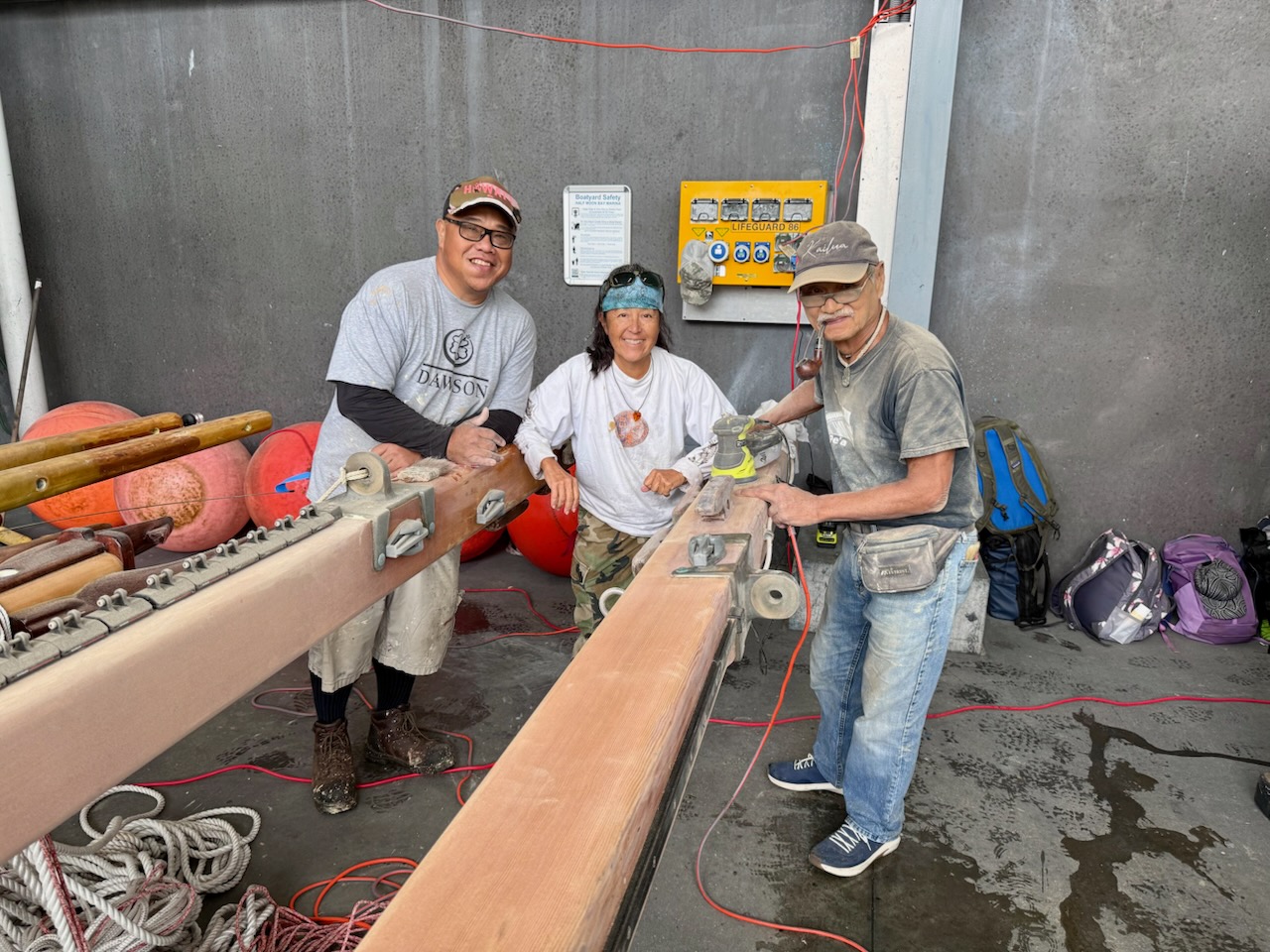
The work continued today as we saw the rain and wind building throughout the day. It rained nonstop but the crews were not deterred from carrying the work forward. The crew worked on sanding “the sticks”- the masts, spars and booms- as well as the steering sweeps and other parts of the canoe that had managed to stay dry. We expect another couple of days of sanding before we can get to a place where we can start to add back on the coats of epoxy and varnish to the now bare wood.
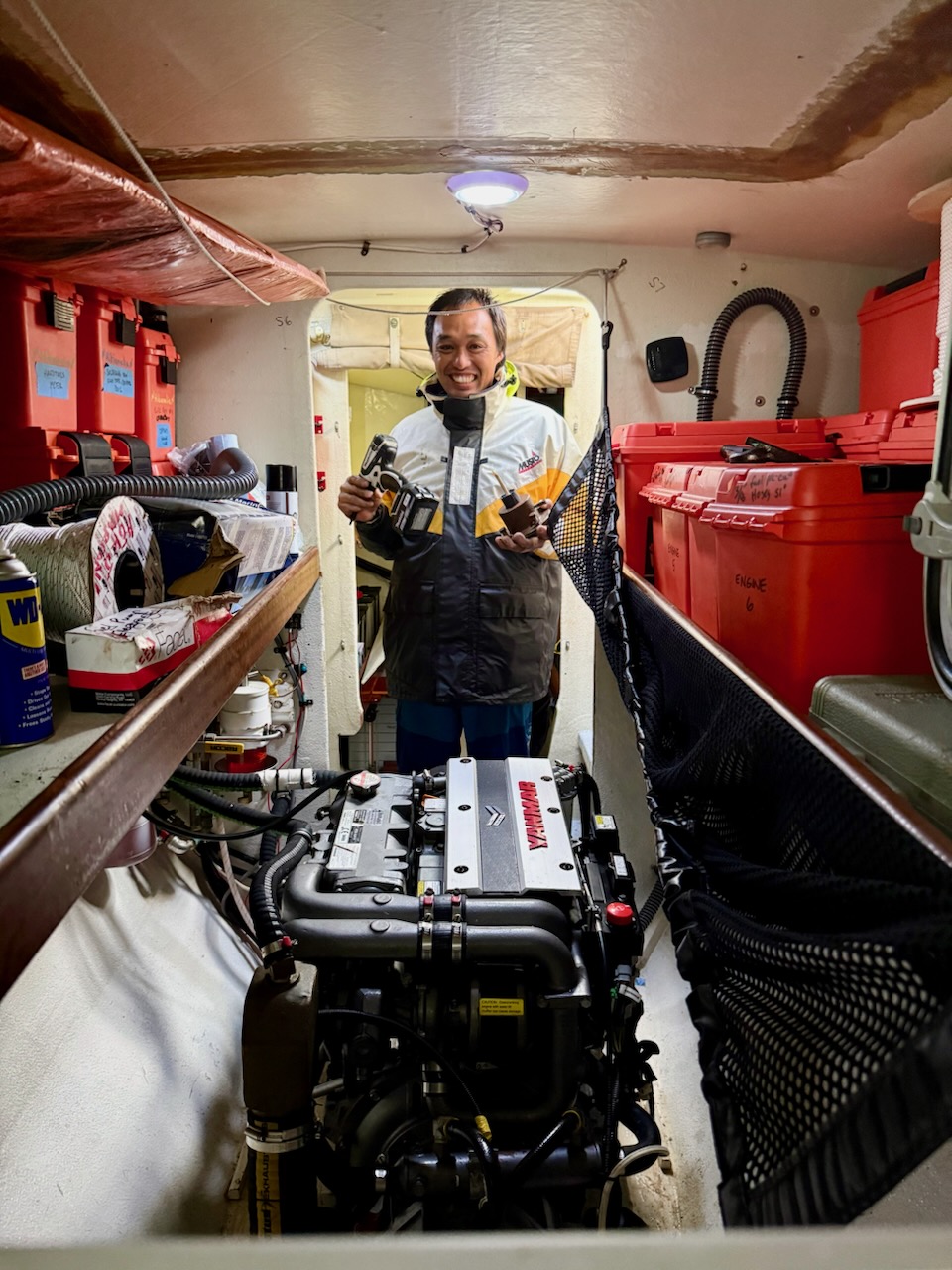
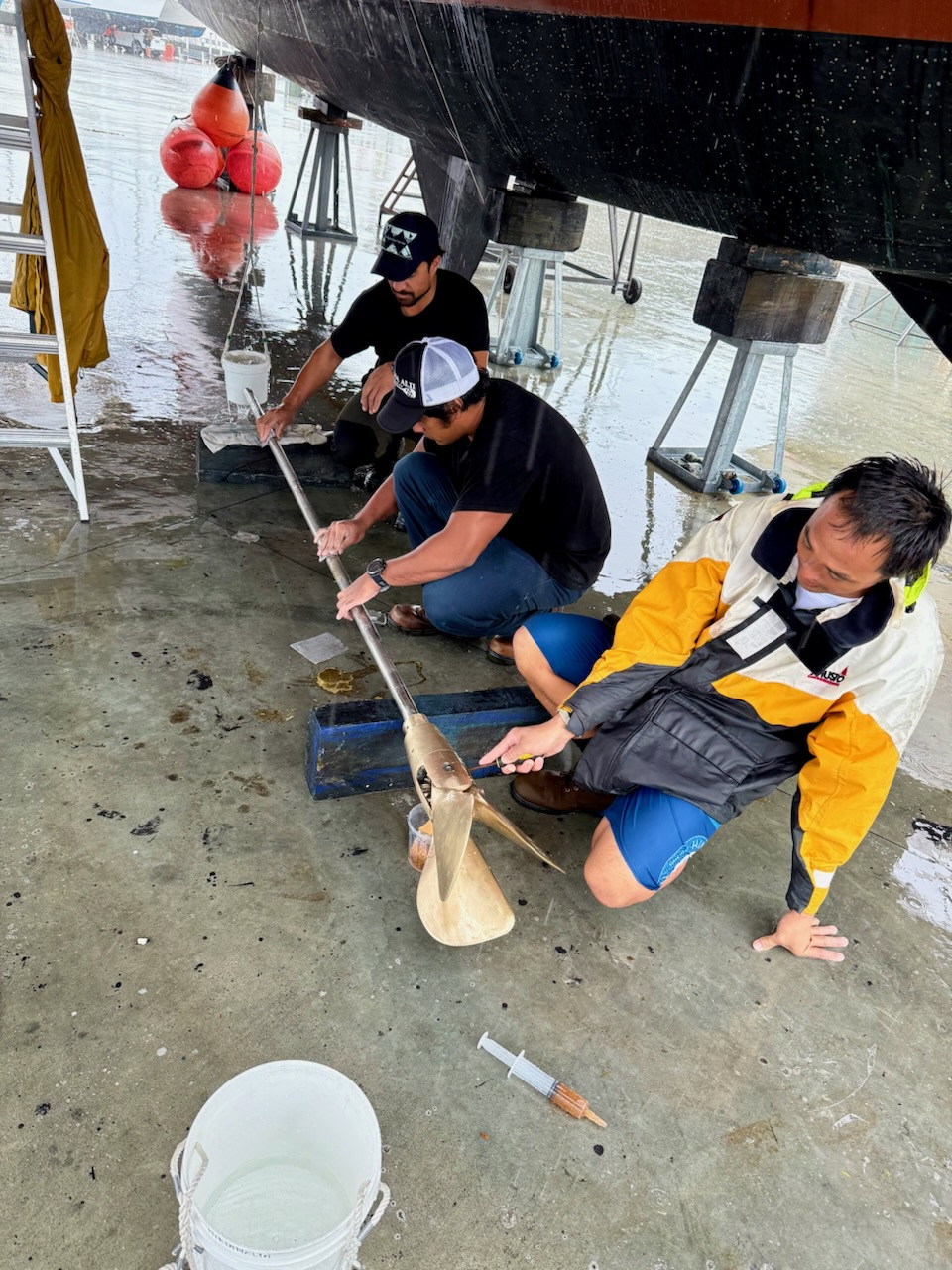
As all of that sanding was going on, the electrical team continued to work in the places that were still a little bit dry as we contemplated how we are going to work on the places that may not be dry for several more days. Tarps were purchased tonight, just in case. But the hardest working crew today was the engine maintenance crew. They pulled both propeller shafts over the last two days, in the rain, with little cover. They all finished the day today soaked head to toe.
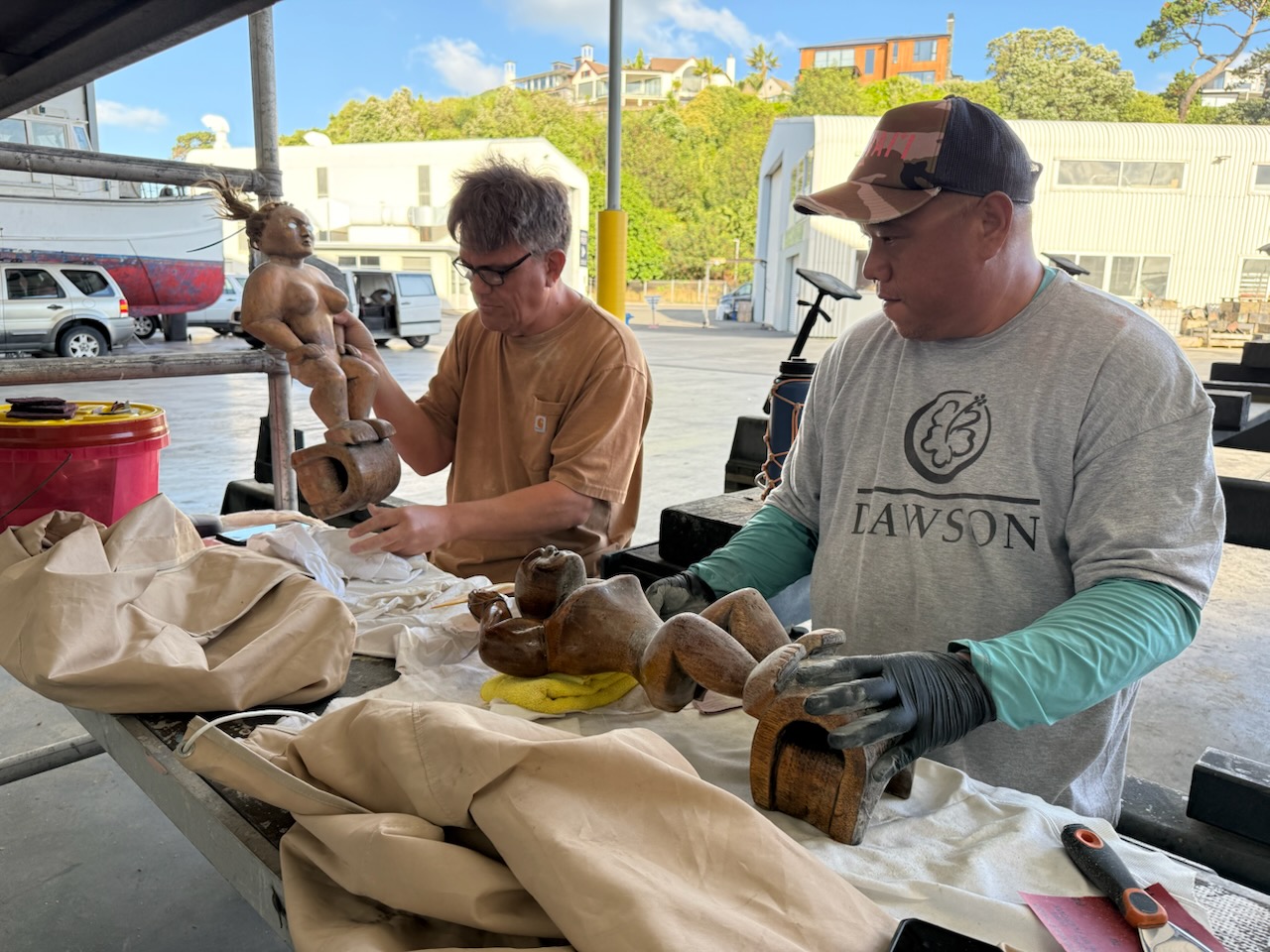
While the conditions are less than ideal- I have noticed how much attention to detail everyone is doing in their work. I sent a friend a pic of Hoku in the drydock and they said “that looks complicated” And it is. We have had to remove dozens of parts and countless pieces of line and rope to be able to refinish these canoes. And all of that has to be put back just as it was (or better) in just under 2 weeks to meet the deadlines of getting back into the water and continuing the voyage. It’s really a privilege to watch everyone work as hard as they are but also with the care and precision of people who really care about these canoes. The folks sanding parts still attached to the canoe take the utmost care to get every last spot of accessible wood to sand, being careful not to nick the lashings. I can tell you that the electricians today took extra time to get the radio box put back together just right. And the crew working on the propellers for Hikianalia wet sanded the props and shafts all day long to bring back their shine like they were brand new.
Details count- we are refinishing and checking over every inch of these vessels. We take care of them so that they can take care of us as they are our home when we are at sea. We are so thankful for the continued opportunity to malama these canoes.

Wed, Jan 21, 2026
Aloha Kākou,
It’s late here in Aotearoa- we went 12 hours at the drydock today to take advantage of the weather that cleared up by mid day. The temperature is nice here tonight. A few of us are out on the lanai of the house we are staying at, contemplating the work ahead of us tomorrow and then through the weekend. Bruce said something at our team meeting that stuck out for me tonight as I was thinking about the work and the looming deadline for this blog. He said that we should always try to work towards making the canoes as simple as possible. And that was because we may need to fix something on our canoes in a small port where we do not have the amenities that we do here in a massive drydock in Aotearoa.
That sentiment drives towards the point of tonight’s thought- Mahalo I Ka Loaʻa- be thankful for what we have. This drydock is working on a compressed schedule for the amount of work that we have on our hands. Additionally we were not able to bring all the tools with us that we normally would for a drydock of this size. But we have 16 individuals who are very motivated to make sure that our canoes are seaworthy and beautiful as they sail port to port. We have just a few hand tools and even fewer power tools that are complemented with the tools that our canoes have on board and we have already had to keep a creative eye to solve challenges that have arisen. Gary is an awesome metal worker. He had to make an adjustment to a metal ring that is part of our anchoring system. He has no vice or other metal working tools. But he found a steel beam and a hammer and went to work sorting out the part. We have been working pretty hard the last few days as we have pushed to get enough sanding done to get to the point of adding Epoxy and varnish. We don’t have enough sanders for everyone so many are sanding by hand but no one has complained, rather, they are talking about steady progress and getting the sanding finished.
And the last example I will leave you all with tonight is that we can partake in ʻAwa in an honorific way even if we do not have all the ancient equipment that is needed to do so. We got to the end of our day, about 7: 30 pm, and a crew member mentioned that ʻawa would be great after such a long day. I said we didn’t have a bowl to which he replied, I just bought a new bucket today. I said we had no strainer, to which he said we had a new bag of rages. No Apu- we happened to have one mug on site. And so there I was at the end of a long work day at the drydock for Hōkūleʻan and Hikianalia in Aotearoa- huddled over a 5 gallon bucket making ʻAwa. Was this the first time I made ʻAwa in a bucket? Certainly not. But in this instance, we got to honor the earth, our canoes, the kiʻi and our leadership and crew that has come all this way to do the work. It didn’t feel any different then when we got together with a carved bowl and mat and coconut apu- this is a great reminder that we should be thankful for what we have but if we keep it simple we can find a path forward no matter what.
Sending aloha to you all,
Nā’ālehu Anthony