Crew Reflection: Moʻorea

The night before our departure to Mo’orea, a quiet sense of heaviness settled over the crew and the community as we gathered for a final dinner in Mataiea. In just a short time, we had been embraced, cared for, and made to feel like family by our new ʻohana. The memories we created and the experiences we shared during our brief stay had left a deep imprint. Mataiea would forever live in each of our hearts.
Over dinner, we had the pleasure of meeting the three new crew members who would be joining us for the sail to Moʻorea. We sat together over dinner, taking time to share stories, laughter, and intentions, slowly weaving them into the fabric of our Hōkūleʻa ʻohana. The evening continued with a delicious meal that nourished both body and spirit, followed by songs and dances that filled the space with laughter, joy, and deep connection.
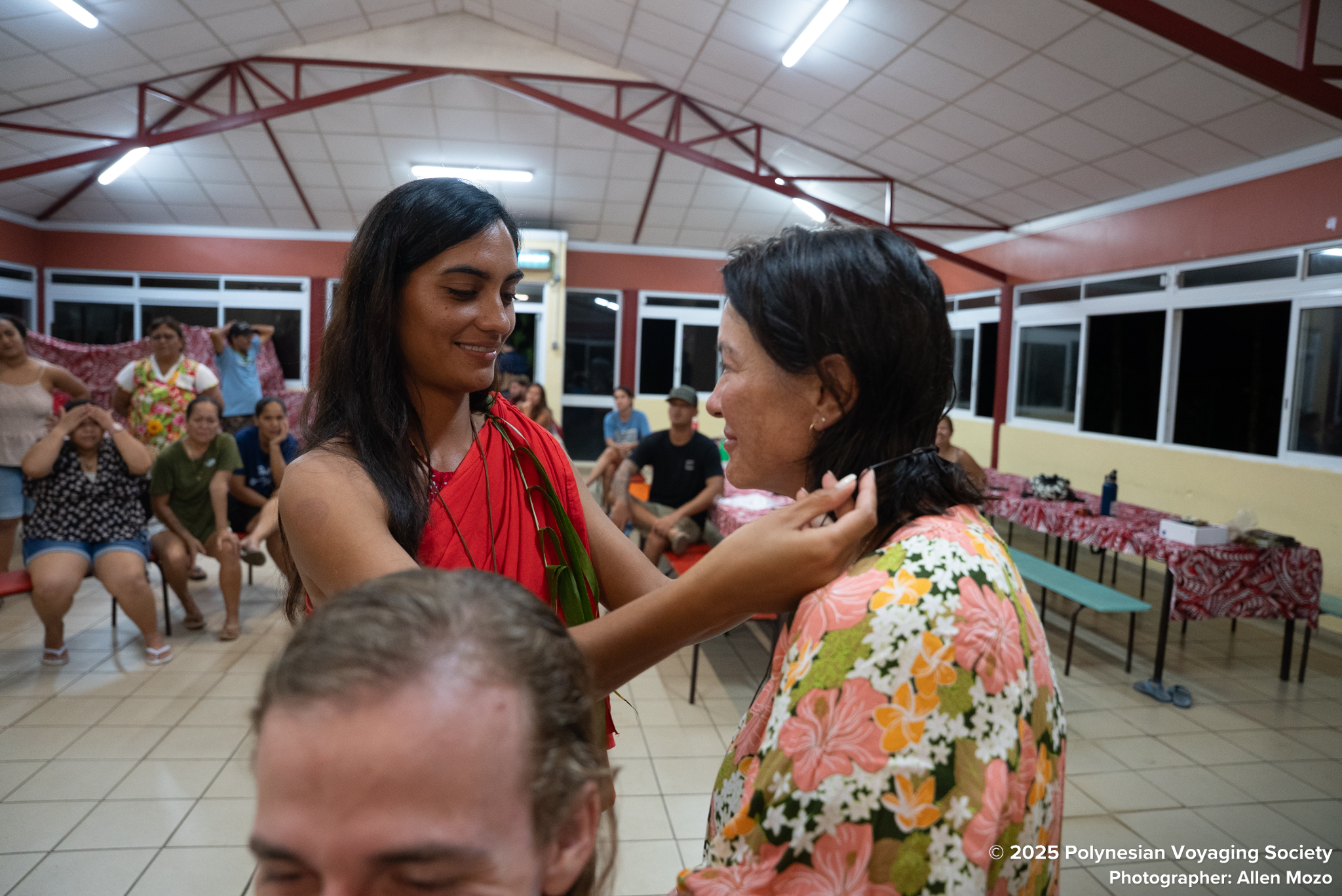
Mark and several crew members offered gifts—wooden sail pendants, lovingly carved from the ‘iako of Hōkūleʻa. The community responded with a gesture just as profound: pearl shell pendants, shimmering with the colors of the sea. “The people of the ocean have given us wood from the land,” they said, “and we, as people of the land, give you these shells from the sea.” It was more than a gift. It was our story and a promise etched into our hearts. It was a profound and beautiful exchange, one woven with deep aloha and mutual respect. It is a story felt by all, and one we will carry in our hearts always. As the night drew to a close and we said our goodnights, I embraced one of the community leaders and gently said, “Goodnight, māmā.” Her eyes filled with tears as she pulled me close, whispering a tender farewell in Tahitian. We held each other for a quiet moment, then smiled through the emotion and said together, “This is not goodbye, this is until we meet again.
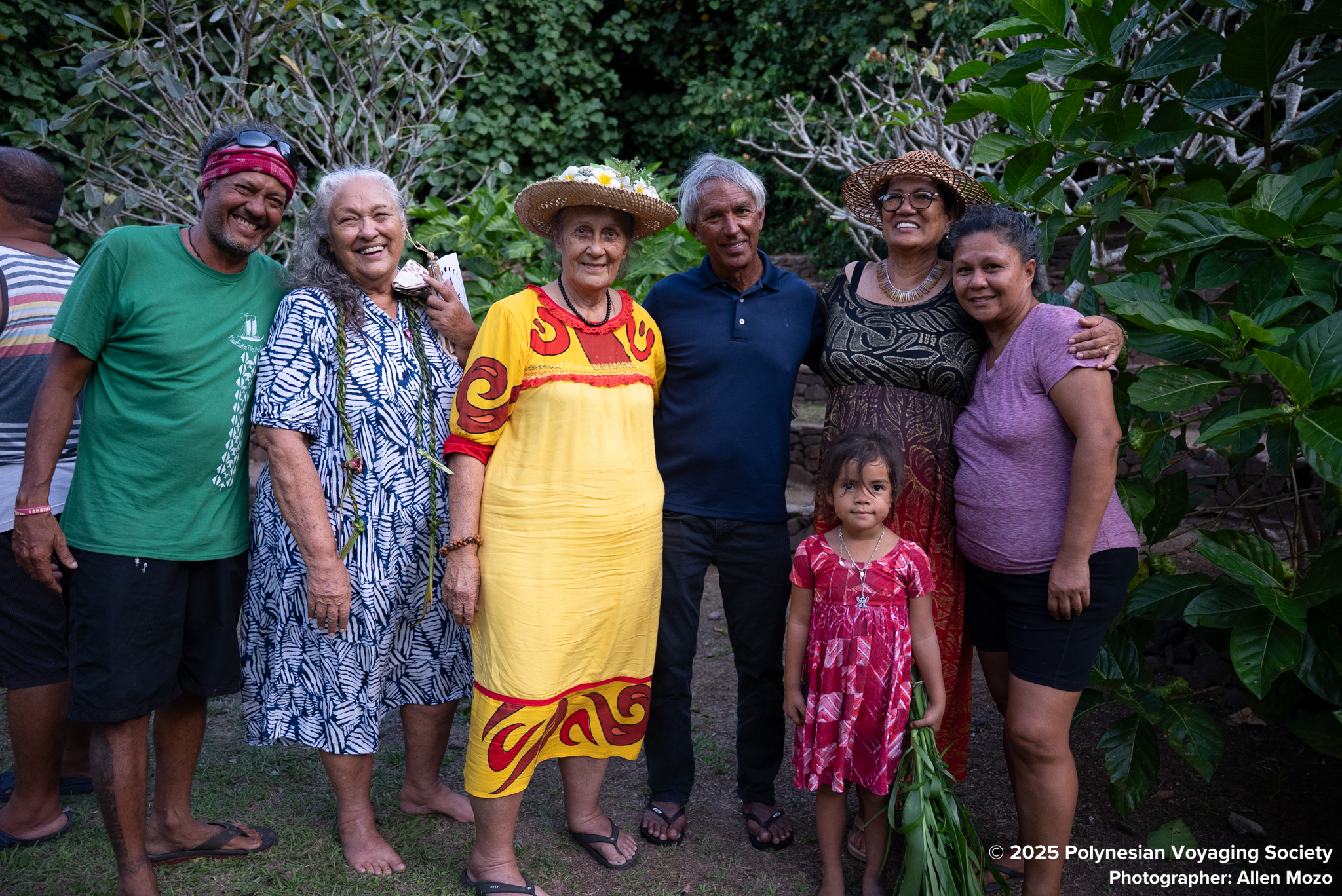
We woke to the familiar call of roosters greeting the dawn, signaling the start of our final morning in Mataiea. Quietly, we gathered our things, tidied our sleeping space, and carried our bags down to Hōkūleʻa. There was a stillness in the air as we made our way to breakfast. The meal was quieter than usual, as we each held the weight of parting and the kuleana that still lay ahead. As we made the final preparations aboard Hōkūleʻa, the moment we had quietly been bracing for had come, departure was upon us. When we looked up from our work, we were met with a breathtaking sight. Our beloved ʻohana stood before us once again, clothed in the same powerful regalia they had worn when they first welcomed us at the marae: garments of deep red, capes woven from natural fibers, and the women adorned with striking black lipstick. Yet something had shifted. When we first met, they stood as fierce guardians—protectors of their land, their people, and their traditions. This morning, their presence still held that strength, still echoed with pride and the spirit of stewardship—but now, it was softened by something even deeper. Standing before us was not only the force of protectors, but the warmth of family. A love unmistakable, unspoken, and everlasting.
As our Mataiea ‘ohana sang their final songs, tears welled in my eyes and when I looked around, I saw the same in every crew member aboard Hōkūleʻa. The truth was undeniable: we were leaving a part of our hearts in this extraordinary place, with these extraordinary people.
It was our turn to sing, to give back. But instead of singing with strength, our voices came out soft and broken, barely audible through the emotion. Tears streamed down our faces, and our voices cracked under the weight of the goodbye. When I finally looked up, I saw the same emotion mirrored in the eyes of our Mataiea ‘ohana. They, too, were crying. In the midst of our shared emotion, we found the strength to steady ourselves and prepare Mama Hōkūleʻa for her next journey from Mataiea to Moʻorea.




Before we knew it, we were entering the channel, where the community of Moʻorea awaited us. In the distance, the rhythmic beat of Tahitian drums echoed across the water, growing louder with each passing moment. It was time to prepare Hōkūleʻa for her arrival. Under the calm and steady guidance of Kapena Jonah, our crew moved with focus and care, readying Māmā for the welcome ahead. Once Hōkūleʻa and Hikianalia were safely docked, we were approached by members of the community who asked who we were and what our intentions were. We answered respectfully and with humility—and in return, we were embraced with warmth and welcome yet again.
On July 10th, the district of Papetō’ai welcomed us ashore with a beautiful ceremony rooted in tradition and care. We sat shoulder to shoulder with our crew, hearts humbled by the words of Papi Punitai and the Tavana. Their voices carried not just greetings, but a gentle urgency, a call to hold tight to Polynesian traditions, to carry them forward with care. Keiki placed lei around our necks, their gestures soft and full of meaning. Traditional drumming and dancing filled the space with energy and joy, and when the dancers lit their poi, flames moved through the night like living rhythm. The beat of the drums, the glow of the fire, and the strength of the dancers left an impression that will stay with us. Mauruuru maitai, Papetō’ai. Thank you for welcoming us with such love.
The next morning, we brought the canoe through the Pao Pao pass, where we were met at the dock by the community. With grace and generosity, they gave their permission for us to land and led us to a pavilion for another warm welcome. Mayor Gina Kautai and the keiki of Pao Pao greeted us with music, dance, and heartfelt words. We were especially moved by the himene of the Tahitian choir school, and by the thoughtful gesture of fresh fruit and water shared with us after the ceremony. Mauruuru roa, Pao Pao, for your warmth, your voices, and your generosity.
That afternoon, we made our way to the Te Pu ʻAtitiʻa Amphitheater, a place cradled by mountains and sky. Built into the hillside, stone-lined benches curved like an embrace around the stage, where we gathered to listen to honored speakers of this Conference on the Ocean. Hinano Murphy wove stories of the Feʻe and the guardian shark constellation, ancestral voices carried forward with grace. Others spoke of the sea, of knowledge passed hand to hand, heart to heart. Their words reminded us that through remembering, we care; through caring, we protect. Surrounded by fruit trees and birdsong, we were held in a space that felt both ancient and alive. I felt humbled and extremely
blessed to have been present in this exchange of cultural wisdom and witness such great care for the ocean.
The next day, the dock came alive with laughter, questions, and the sound of bare feet on the canoe. Canoe tours stretched from morning through afternoon, and still we lingered, each conversation a thread in the growing tapestry of our time here. The skies were clear, the breeze just enough, and Moʻorea was filled with the joy of shared moments. When we weren’t sharing stories on deck, we swam nearby, grabbed a bite to eat, or sailed with the crew of Honoura, a small, spirited canoe from the association Aimeho Va’a Ta’ie, offering keiki short voyages across the bay. We took turns joining when space allowed, each ride a reminder of why we voyage: to connect, to learn, to feel.
To the Te Pu ʻAtitiʻa Cultural Center, mahalo nui. For your care, your stories, your fenua. For three days, you made us feel not like guests, but like ohana.
Na nā, Moʻorea. Mauruuru roa. Until we meet again.


