Crew Reflection: They Gave Earth Its Breath, Hā, Laying the Foundation for All Life That Would Follow.

In the Kumulipo, an ancient Hawaiian chant of creation, life begins in the depths of Pō, emerging first as coral, seaweed, and creatures of the ocean. Modern science tells us that over 3.4 billion years ago, photosynthetic microbes (ancestors of early phytoplankton) began releasing oxygen into the atmosphere, slowly transforming the Earth. These ancient organisms, like the limu of the Kumulipo, brought light into darkness. They gave Earth its breath, hā, laying the foundation for all life that would follow. The chant and the science, though different in language, tell a shared truth: that life’s origins are oceanic, luminous, and interconnected.
It was an immense pleasure and privilege to share my knowledge and enthusiasm for planktonic ocean life with the crew members of Leg 13 and the communities we engaged with. As part of the educational partnership between PVS and the Virginia Institute of Marine Science (VIMS), I collected samples for various studies throughout the journey. In each port, samples were collected for plankton observation and documentation, microplastics analysis, and microbial life studies. I process the plankton samples myself, as that is my area of expertise, but we have a team of scientists back at VIMS who will process the others. For each plankton sample collection, I towed a plankton net around the canoe for five minutes to “catch” as many plankton as possible. 10 milliliters of the sample is then placed into the PlanktoScope, a device equipped with a microscopic lens and digital camera that captures close-up images of the plankton within. These images were uploaded onto a flash drive and were transported back to VIMS for analysis. Once analyzed, we’ll upload the best plankton portraits from each port, so that everyone, anywhere in the world, can follow the path of plankton around the Pacific, illuminated by Hōkūleʻa. It’s one way to help connect people to the unseen life of the ocean that is vital to all life on Earth.
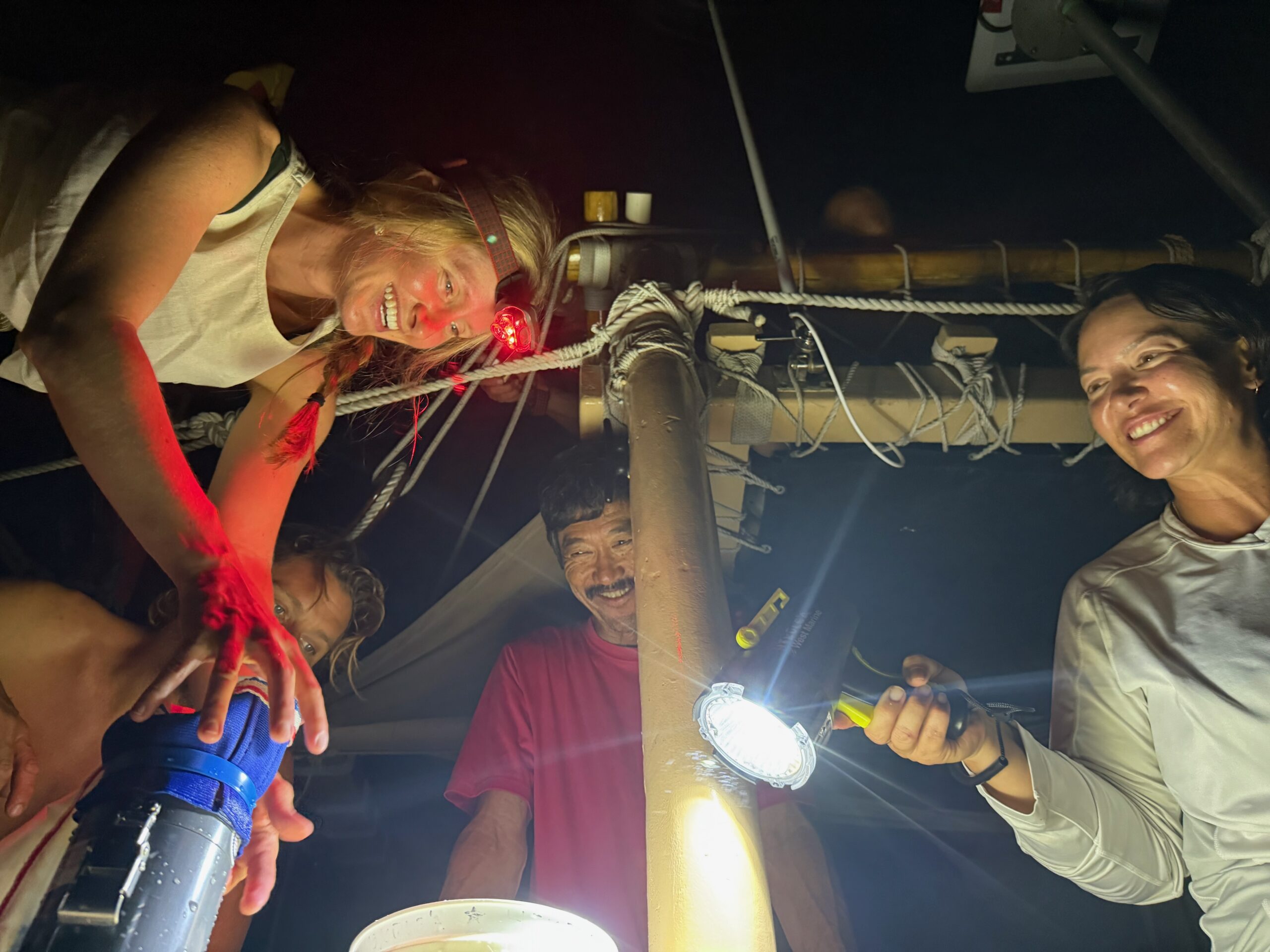
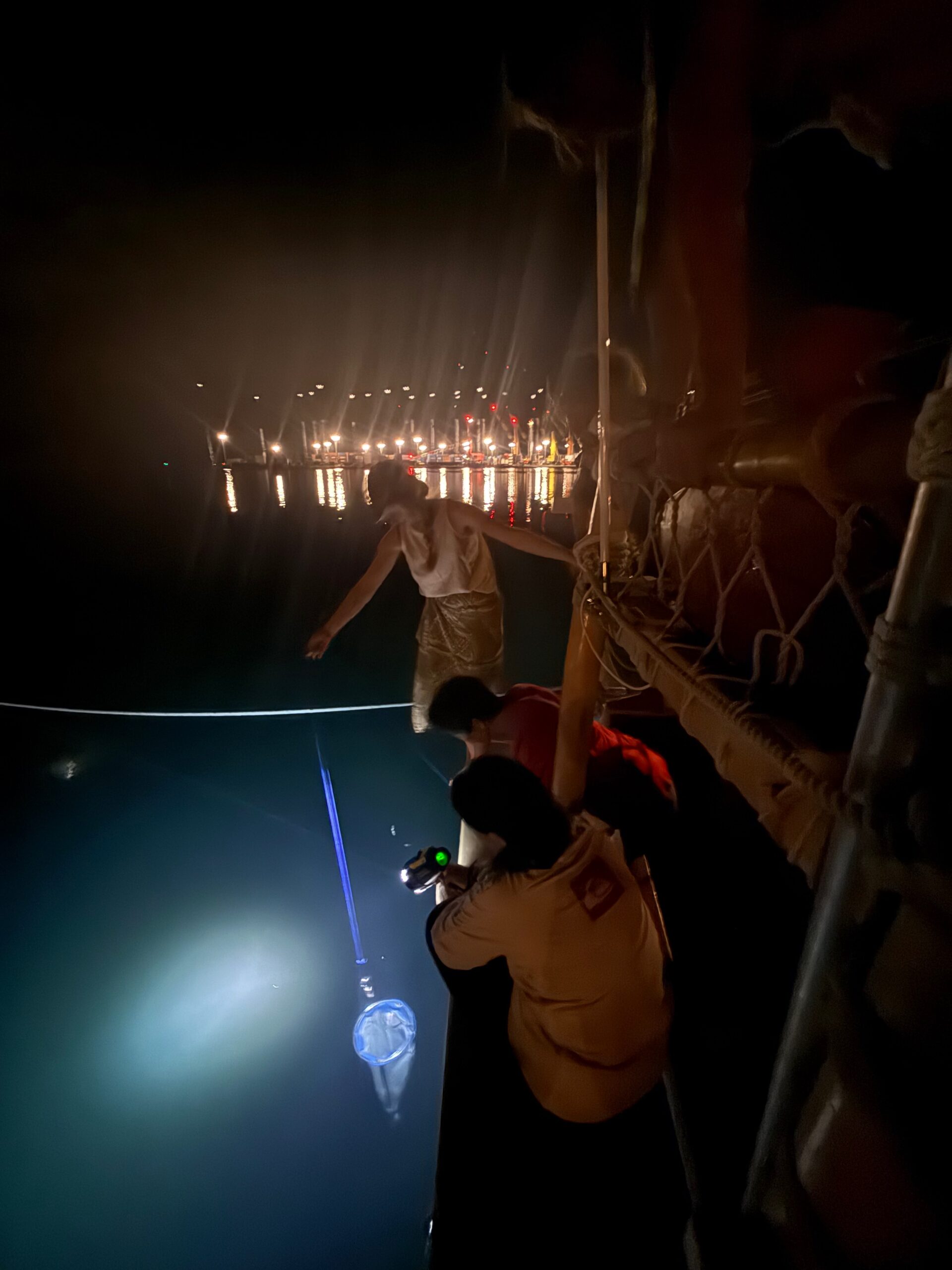
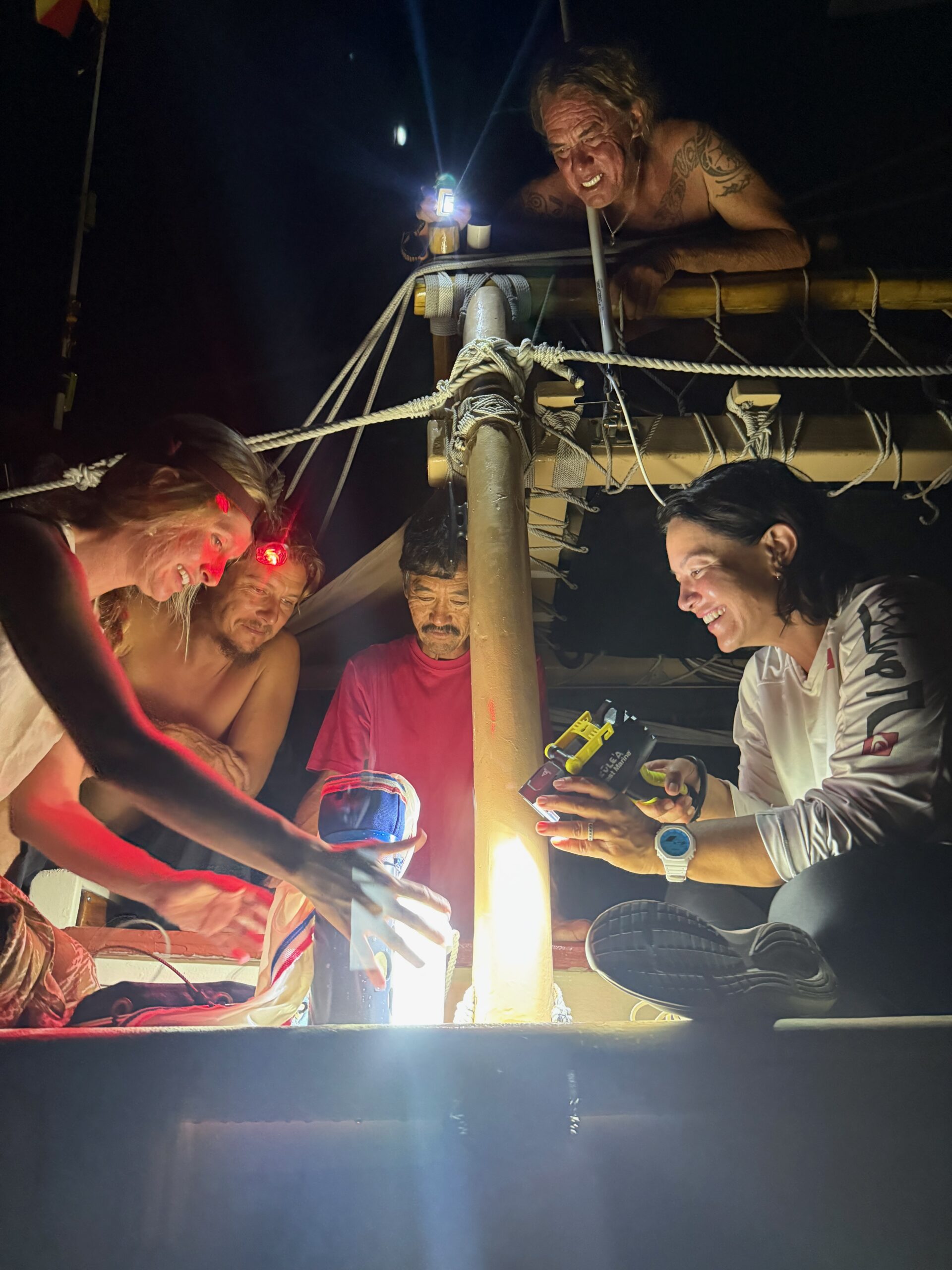
Reflection: One special night, before a morning education event with students, Pua, a few other eager Hoku and Hiki crew members, and I collected plankton under the stars. Pua held a bright light over the water while we waited for zooplankton to migrate toward the surface, a behavior that helps them reach food-rich areas at night (this behavior is called diel vertical migration, or DVM). When we saw specks of life gathering in the light, we used a plankton net to scoop the water and collect them. It was a fun and meaningful way to demonstrate DVM, and to gather live specimens to use as visual aids for the next day’s event. My favorite part of the evening was witnessing the curiosity and enthusiasm of the other crew members as they helped with sampling.
The students from Tautira Elementary enjoyed our Kilo + plankton science demonstration the next day, and we had a lot of fun with them too! There was a bit of a language barrier, but the students loved helping us with our French and Tahitian translations. To show the importance of plankton in the ocean, we practiced Kilo, making observations of what we could see around us and in the water beside the dock. There were corals and fish, and in the right patch of sunlight, we could even spot tiny specks of plankton! With the bucket of plankton collected the night before as a visual aid, we explained how large animals like whales and rays survive and grow by eating lots of plankton. We also shared that the air we breathe is made by plankton too, specifically the phytoplankton, which are like tiny water plants. Phytoplankton are harder to see with the naked eye, so we showed them a little poster with photo examples of local species. The students left us with a cheerful “Merci, plankton!” before heading to their next learning station.
Sharing plankton science in these ways reminded me that wonder is a universal language, one that flows easily between cultures when we pause, observe, and connect with the ocean together. In moments like these, the deeper purpose of sharing science and Kilo reveal itself, as an act of respect, of listening, learning, and weaving knowledge systems together. This work is part of a broader goal of bridging cultures and communities across Earth, working together to preserve the vitality of the ocean’s smallest life forms and the wisdom of those who have long understood the ocean’s rhythms.
Mahalo nui to the Leg 13 crew members for their support, love, and eagerness to learn and share!